

From Staid to Sensational: How Gold Became the World's Most Volatile 'Meme' Asset
In a remarkable market reversal, gold—long considered the quintessential boring, stable investment—has begun trading with the wild, unpredictable swings characteristic of internet-fueled meme stocks. This dramatic shift underscores a profound change in investor behavior and global economic sentiment.
Unprecedented Volatility in a Traditional Haven
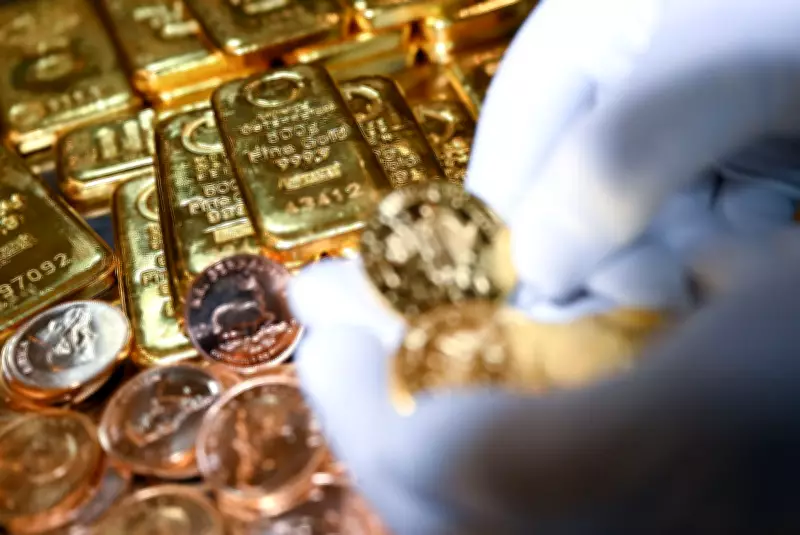
Recent weeks have witnessed intense price fluctuations in the gold market, a stark departure from its historical role as a safe-haven asset during times of uncertainty. Gold bars and coins, like those seen at dealers such as Munich's Pro Aurum, are now at the center of a trading frenzy that more closely resembles the speculative rallies seen in equities like GameStop or AMC.
This volatility is not merely a blip but appears to be driven by a confluence of factors, including shifting monetary policies, geopolitical tensions, and a new generation of retail investors applying strategies learned from social media trading communities to the commodities market.

The Meme Stock Phenomenon Infects Commodities
The term "meme stock" typically refers to equities that experience rapid, often irrational price surges driven by collective action on platforms like Reddit and X (formerly Twitter). Gold's recent behavior suggests this phenomenon has now spilled over into the commodities sector.
Key drivers behind this transformation include:
- Digital accessibility: The ease of trading gold through ETFs and online platforms has democratized access, inviting more speculative retail participation.
- Macroeconomic anxiety: Persistent inflation concerns and debates over central bank policies have amplified gold's appeal as a hedge, but also as a speculative tool.
- Social media influence: Viral discussions and trending hashtags can now trigger rapid buy-or-sell movements in gold, mirroring the dynamics of stock-based meme rallies.
Implications for Investors and the Market
This new reality presents both opportunities and significant risks. For traditional investors, gold's heightened volatility undermines its classic role as a portfolio stabilizer. The asset's price can now swing dramatically based on sentiment and online chatter, rather than purely on fundamental economic indicators.
Conversely, for speculative traders, gold offers a new, high-liquidity playground. However, the potential for sharp, unexpected downturns—a hallmark of meme stock corrections—is now a very real danger in the precious metals space.
The situation highlights a broader trend of blurring lines between asset classes. What was once a slow-moving, predictable market is now subject to the same forces of digital crowd psychology that have reshaped equity trading in recent years.
As gold continues to trade like a meme stock, market watchers are left to ponder whether this is a temporary anomaly or a permanent recalibration of one of the world's oldest stores of value.






