Global Stock Markets Experience Uptick as Asian Trading Halt for Lunar New Year
Global share prices advanced on Monday, February 17, 2026, while the majority of Asian financial markets remained closed in observance of the Lunar New Year holiday. This annual celebration, marking the Year of the Horse, led to reduced trading activity across key economic hubs in Asia, creating a unique dynamic in international finance.
Market Performance Amid Regional Closures
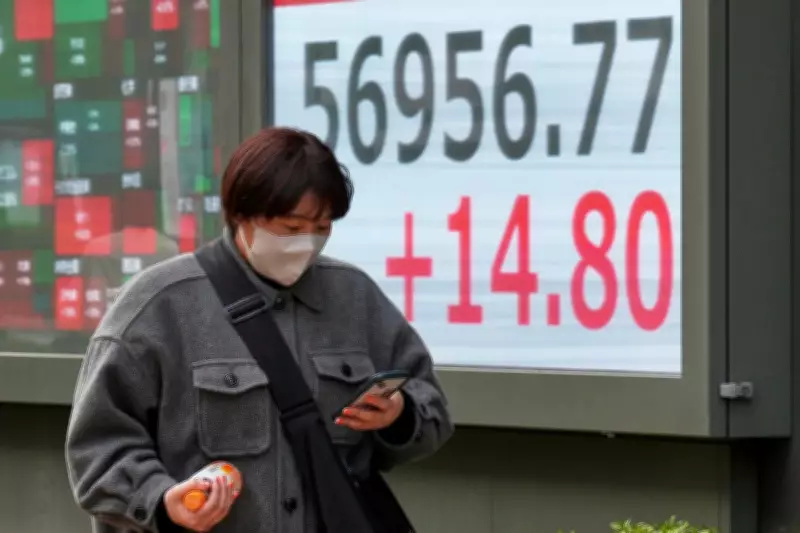
The Japanese Nikkei index showed a modest gain, as captured in Tokyo where an electronic stock board displayed the positive movement at a securities firm. Japan's market was one of the few in Asia that remained open during this period, providing a glimpse into regional financial sentiment despite the broader holiday shutdown.
This pattern of global share advancement during Asian market closures reflects the interconnected nature of modern financial systems, where trading continues in other parts of the world even when specific regions pause for cultural celebrations. The Lunar New Year, celebrated across many Asian countries including China, South Korea, and Vietnam, traditionally results in significant market closures that can last several days.

Broader Financial Context
While Asian markets were quiet, other global exchanges maintained normal operations, contributing to the overall positive trend in share prices. This situation highlights how financial markets have become increasingly globalized, with trading activity seamlessly shifting between regions based on local holidays and business hours.
The temporary reduction in Asian trading volume did not appear to dampen investor confidence globally, as evidenced by the upward movement in share prices across multiple indices. Market analysts noted that such holiday periods often create unique trading patterns, with reduced liquidity in specific regions potentially amplifying movements in other open markets.
Cultural Significance Meets Financial Markets
The Lunar New Year represents one of the most important cultural celebrations across Asia, with businesses, schools, and financial institutions typically closing for multiple days. This annual event consistently creates predictable patterns in global trading, as investors adjust their strategies around known market closures.
As the Year of the Horse commenced, financial professionals worldwide monitored how the extended Asian market closure might affect global trading volumes and price movements in the days following the holiday period. Historical data suggests that trading activity typically rebounds significantly once Asian markets reopen, often bringing increased volatility as pent-up trading demand finds expression.
The current market situation demonstrates the delicate balance between cultural traditions and global financial operations, with markets adapting to regional celebrations while maintaining continuous international trading opportunities for investors worldwide.