

BP Halts Share Buybacks to Strengthen Financial Position
BP Plc has announced the suspension of its share buyback program as the United Kingdom-based energy giant faces mounting pressure to deliver on its corporate turnaround strategy. The company is taking decisive action to shore up its balance sheet during a period of significant transition and strategic realignment.
Financial Measures and Strategic Shifts
The energy major has slashed its US$750 million quarterly stock repurchase program, which had already been reduced in the previous year according to recent earnings reports. In addition to halting buybacks, BP has withdrawn its previous guidance of returning 30 to 40 percent of operating cash flow to shareholders. The company now aims to keep 2026 spending at the lower end of its earlier forecast range.
These financial moves represent a clear prioritization of balance-sheet repair over immediate investor payouts. Analysts suggest these difficult decisions are designed to create a cleaner financial foundation for incoming chief executive Meg O'Neill, who will assume leadership in April following a tumultuous year of management changes.

Leadership Transition and Strategic Context
The fourth quarter of 2025 capped a challenging year for BP that began with activist investor Elliott Investment Management pushing for significant changes and concluded with Chairman Albert Manifold replacing Murray Auchincloss as CEO. The strategic shakeup announced last February marked a notable shift away from underperforming low-carbon ventures and refocused the company on its core oil and gas operations.
Chairman Manifold acknowledged in December's leadership transition announcement that while the strategic refocus was correct, "increased rigour and diligence are required to make the necessary transformative changes to maximize value for our shareholders." The groundwork is now being laid for incoming CEO O'Neill, who brings a track record as a champion of fossil fuels from her previous role leading Woodside Energy Group Ltd.
Financial Position and Market Reaction
Despite these financial measures, BP's indebtedness showed minimal improvement last year. The company maintained its target range of US$14 billion to US$18 billion in net debt for the end of 2027, even with anticipated savings from the buyback suspension and ongoing efforts to divest low-returning assets.
RBC analyst Biraj Borkhataria expressed surprise at the unchanged net debt target, noting in a research report: "We are a little surprised to see the net debt target unchanged given the implied savings from the buyback over 2026-27." BP's net debt stood at approximately US$22.2 billion at the end of last year, excluding hybrid bonds and lease obligations.
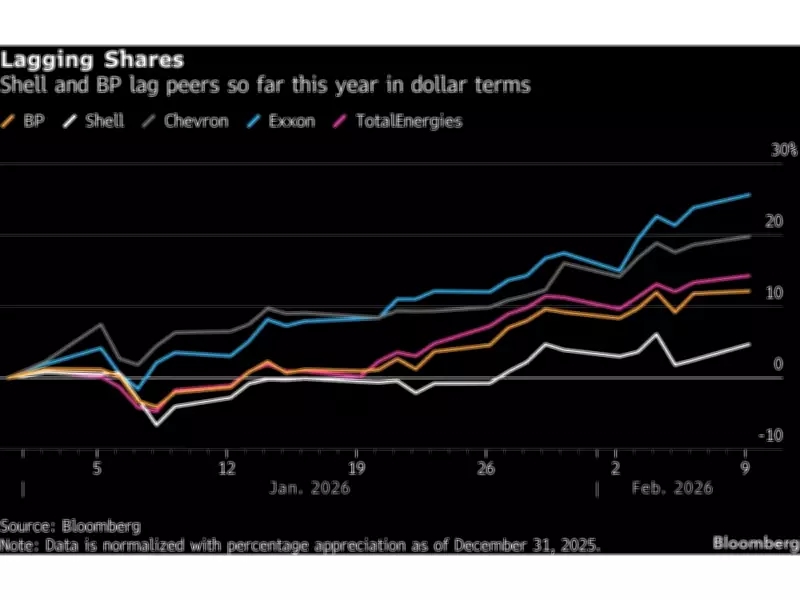
The market responded negatively to the announcement, with BP shares falling as much as 5.7 percent in early London trading following the earnings report. This development leaves BP as the only one among the top five oil majors currently without an active share repurchase program.
Industry Context and Competitive Landscape
The decision comes during a period when major oil companies have been funneling substantial cash to investors, particularly during recent years of elevated crude prices. While energy prices have moderated, American competitors Chevron Corp. and Exxon Mobil Corp. have signaled their intention to maintain current levels of shareholder returns.
Among European peers, Shell PLC has maintained its quarterly buyback program of US$3.5 billion, while TotalEnergies SE is expected to announce potential reductions to investor payouts when it reports financial results. BP's chief financial officer Kate Thomson confirmed in an interview that any future decisions regarding share repurchases will await the arrival of incoming CEO O'Neill in April.
The incoming leadership will inherit an upstream portfolio featuring key assets in strategic regions including Brazil, the Middle East, and the United States, positioning the company for potential recovery once its financial stabilization measures take full effect.






