

Analysts Identify 'Peak Pessimism' in Consumer Stocks as Potential Buying Signal
Recent dismal performance in U.S. consumer-discretionary stocks, including notable names like Lululemon, has reached a level of extreme negativity that researchers argue may signal a prime buying opportunity. According to an analysis conducted by SentimenTrader, the current market conditions reflect what they term "peak pessimism," which historically precedes significant rebounds.
Historical Data Points to Potential Rally
The research reveals a compelling statistical pattern. More than 50 percent of stocks within the S&P 500 Consumer Discretionary index are currently trading at least 20 percent below their 252-day highs. This specific configuration has occurred 28 times in the past, and in 23 of those instances, the index proceeded to rally over the following year. The average gain recorded in these scenarios was an impressive 14 percent.
"This swelling proportion of battered stocks within a highly pro-cyclical sector highlights peak pessimism," stated SentimenTrader researchers in a client note. "At this juncture, the bearish macroeconomic narrative has been discounted by the market. This sets up a textbook asymmetric risk/reward scenario for investors willing to step in while sentiment is washed out."

Sector Underperformance and Contributing Factors
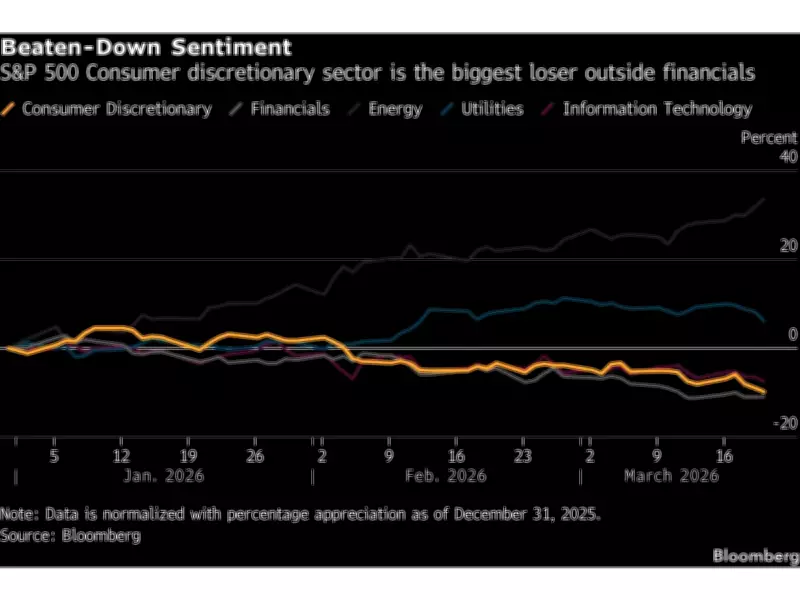
The S&P 500 Consumer Discretionary index, which houses companies such as Lululemon Athletica Inc., Ulta Beauty Inc., and Wynn Resorts Inc., has suffered a 10 percent decline year-to-date. This drop is more than double the loss experienced by the broader S&P 500 index, positioning the consumer discretionary sector as the second-worst performer among the 11 S&P 500 sectors, trailing only financials.
The sector's pain stems from a confluence of economic pressures. The surge in energy prices following the onset of the war in Iran has created a dual threat: escalating production costs for companies and a reduction in consumer spending on non-essential items. These challenges are compounded by ongoing anxieties regarding the labor market as companies continue to implement job cuts.
Expert Outlook on a Potential Rebound
Mark Hackett, chief markets strategist for Nationwide, suggests this beleaguered sector could be among the first to recover once prevailing uncertainties begin to dissipate. "This group takes a psychological beating from investors moving to the sidelines," Hackett explained. "If we get a resolution to the headwinds we are facing, this sector is seen absolutely as a proxy for overall investor and consumer sentiment and therefore will do quite well, if things return to normal."
The optimistic case is partly built on expectations for a resurgence in earnings growth. Analysts point to a resilient U.S. economy and growing optimism that the most severe impacts of the trade war initiated under President Donald Trump have passed. Data compiled by Yardeni Research indicates that first-quarter profits for the consumer discretionary group are projected to rise, following a decline in the previous quarter—the first such drop in twelve quarters.
Caution and Selective Opportunities
However, Hackett cautions that a recovery is unlikely to be uniform across all consumer discretionary stocks. He anticipates a potential decoupling between newer, tech-oriented "new economy" companies and more traditional consumer brands. For instance, he suggests that companies like Carvana Co., an online used car platform, and delivery service operator DoorDash Inc. may require more time to stage a comeback.
Conversely, Hackett identifies more traditional consumer-facing companies such as casino operator Las Vegas Sands Corp., cruise ship operator Carnival Corp., and athletic wear giant Nike Inc. as potential early beneficiaries should overall consumer sentiment begin to improve. The central question posed by analysts remains whether the market has overreacted to the current macroeconomic challenges, thereby creating a window of opportunity for discerning investors.






