

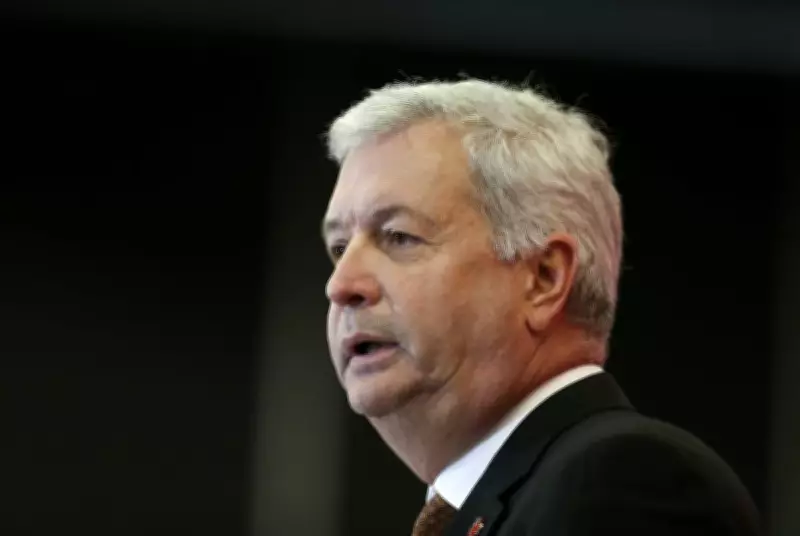
Air Canada CEO Faces Rebuke from PM Carney Over English-Only Crash Statement
Canadian Prime Minister Mark Carney has publicly reprimanded Air Canada's chief executive, Michael Rousseau, for releasing a video statement exclusively in English following a tragic runway collision at New York's LaGuardia Airport. The incident, which resulted in the deaths of two pilots, has sparked renewed scrutiny of the airline's compliance with Canada's Official Languages Act and its commitment to bilingual communication.
Controversial Video Statement
In the video uploaded to Air Canada's website on Monday, Rousseau provided an update on the situation and expressed his "deepest sorrow for everyone affected." However, his use of French was minimal, limited to "bonjour" at the beginning and "merci" at the end, with French captions provided at the bottom. The airline explained in a statement that Rousseau recorded the message "as a matter of priority before departing on a flight for the crash site" and that "despite his efforts, his ability to express himself in French does not allow him to convey such a sensitive message in that language as he would wish."
Political and Public Backlash
Prime Minister Carney addressed the issue directly with reporters on Wednesday, stating, "We proudly live in a bilingual country and companies like Air Canada particularly have a responsibility to always communicate in both official languages, regardless of the situation." He expressed disappointment, calling the message a display of "lack of judgment and lack of compassion." The backlash intensified as many French-speaking Quebecers noted that one of the deceased pilots, Antoine Forest, was from Quebec. The Air Canada Express aircraft, operated by Jazz Aviation LP, had flown from Montreal to New York before the collision with an airport fire truck after landing.

Quebec Premier Francois Legault went further, calling for Rousseau's resignation. "If he still doesn't speak French, that's disrespectful to his French-speaking employees and customers. So yes, if he doesn't speak French, he should resign," Legault asserted. Members of Parliament have also expressed indignation, summoning Rousseau to appear before the official languages committee by May 1 to address the matter.
Historical Context of Language Controversies
This incident is not the first time Rousseau has faced criticism over his handling of the French language. In 2021, shortly after his appointment as CEO, he delivered a speech to Montreal business leaders almost entirely in English. Following the event, he sparked outrage in Quebec by expressing pride in living in Montreal for over a decade without speaking French, despite issuing an apology. Then-Prime Minister Justin Trudeau labeled the situation "unacceptable." Since then, Rousseau has committed to learning French, completing over 300 hours of French classes, according to Air Canada.
Legal and Corporate Obligations
As Canada's largest airline and a federal government-regulated entity, Air Canada is subject to the Official Languages Act, which mandates equal services in English and French. The company is headquartered in the Montreal region, the business and financial center of Quebec, the only Canadian province where French is the majority language. This legal framework underscores the expectation for bilingual communication, especially in sensitive situations involving public safety and national identity.
The ongoing debate highlights the broader challenges of language policy in Canada, where bilingualism is a cornerstone of national unity. As Air Canada navigates this controversy, the focus remains on balancing corporate responsibilities with cultural sensitivities in a diverse society.






