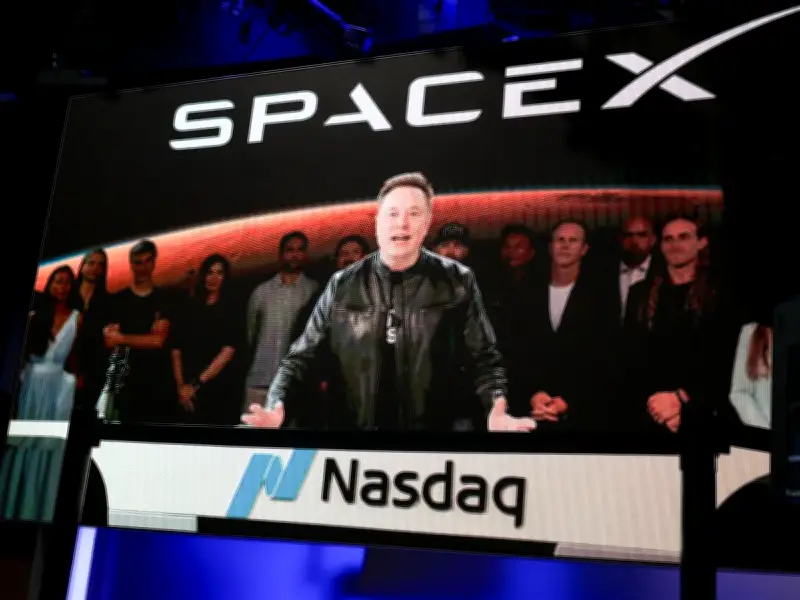
SpaceX is being increasingly shunned by sustainability-focused fund managers who view the company as too risky due to the extraordinary level of control Elon Musk will wield following its initial public offering.
Governance Concerns Mount
Marcela Pinilla, director of sustainable investing at Zevin Asset Management LLC, stated in an interview that SpaceX is 'simply too risky for the type of longevity we want to see in a company.' Zevin is among a growing list of investors publicly criticizing SpaceX's governance structure, which grants Musk more than 80% of voting rights while also making him CEO, chief technical officer, and board chair. Effectively, only Musk can remove himself from the CEO position.
'This is a company that cannot be sued, cannot be sold, cannot be contested,' Pinilla added. Under Texas incorporation rules, shareholders would need to own about $52 billion in shares—roughly 3%—to raise issues with the board.

Shareholder Rights Eroded
Nell Minow, co-founder and chair of ValueEdge Advisors LLC, described the IPO as one that 'extinguishes shareholder rights entirely,' eliminating the ability to sue for fiduciary failures and restricting access to books and records.
SpaceX did not respond to a Bloomberg request for comment.
Pension Funds Voice Alarm
AkademikerPension, a $25 billion Danish pension fund, has also opted out. CIO Anders Schelde called SpaceX 'grossly overvalued' with a 'catastrophic governance structure.' In a Bloomberg Television interview, Schelde warned that retail interest reflects a 'fear of missing out' rather than sober risk assessment, noting that 'over the coming years many things can and will go wrong' and good governance is critical in adverse scenarios.
In the UK, EdenTree Investment Management, overseeing $4.3 billion, is staying away. Senior sustainable investment analyst Hayley Grafton said the firm is not comfortable allocating client assets 'to a structure where weak investor protections appear to be the price of admission.'
US public pension funds have also expressed alarm. New York City Comptroller Mark Levine remarked that while founders seeking more control is understandable, Musk's plan 'is way beyond what we've seen.'
The growing backlash highlights concerns that SpaceX's IPO could normalize the dilution of shareholder protections, setting a risky precedent for corporate governance.