On a rainy April evening, the red-carpet reopening of Roche Bobois's newly redesigned Toronto flagship drew a spirited crowd to the century-old heritage building at 101 Parliament Street in the King East design district. The atmosphere inside blended salon elegance with theatrical flair, as Moet champagne flowed and the design community mingled through layered interiors that captivated every sense.
A Glimpse into the Future of Luxury Retail
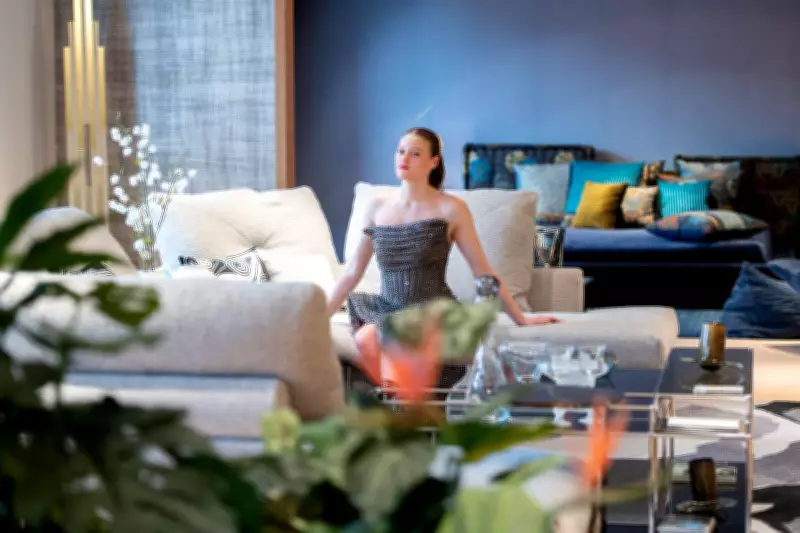
Soft strings and saxophone music set the backdrop while models posed on statement sofas. Live illustrators turned guest photos into caricature keepsakes, and a theatrical cocktail station added a final flourish. This event felt less like a furniture launch and more like a preview of where high-end retail is heading. High-end home brands are reimagining physical stores, transforming showrooms into immersive spaces that no online platform can replicate.
"At Roche Bobois, we believe true interior design service comes from a fully immersive experience where clients can visualize, feel and live the spaces they are furnishing," said Pierre Berardo, Roche Bobois's general manager for Canada, who traveled from Paris for the inauguration.

Design and Architecture
The two-level showroom spans nearly 13,000 square feet, conceived by the brand's in-house Paris design team and executed locally by Matthew Chong of Barrett Architect Firm. The layout centers around a light-filled atrium and a sculptural open staircase connecting both floors. Warm-wood flooring, a fireplace, a floor-to-ceiling living plant wall, and a refreshed facade give the space a residential comfort rarely found in conventional retail.
"Each renovation is carefully tailored to its specific space, considering the local architectural context," Berardo explained. "We aim to create spaces that feel both authentically local and unmistakably Roche Bobois."
Technology Integration
Technology plays a central role in the redesigned showroom. "We have integrated digital tools such as a connected 3D design studio, where clients work with in-house designers using rendering programs, screens and tablets to visualize and personalize interiors before committing to a purchase," Berardo said. This made-to-order ethos—customizing dimensions, fabrics, finishes, and layouts—has long been a Roche Bobois hallmark, and the new technology makes the process more intuitive and reassuring for clients making significant investments.
Culture and Collaborations
If technology is one pillar, culture is the other. Roche Bobois has built a distinct creative identity through collaborations that blur lines between furniture, fashion, and art. Missoni's intricate knits dress the iconic Mah Jong sofa, the modular masterpiece designed by Hans Hopfer in 1971 and one of the brand's enduring bestsellers. "These partnerships are the core engine of our creativity," said Gregory Dias, head of trends. "They allow clients to perceive furniture not just as functional objects, but as genuine collector's pieces."
Classic pieces are refreshed rather than retired. The Bubble sofa, a Roche Bobois signature for 13 years, appeared in a striking new teal colorway. Seasonal motifs like stripes surfaced across rugs and upholstery with a more graphic, contemporary edge, though Dias positions trends as accents rather than foundations. "The core remains anchored in timeless design and artisanal quality," he said.
Outdoor Living Expansion
Outdoor living is claiming a larger share of the conversation. Dias describes exterior spaces as a natural extension of the home, demanding the same comfort, refinement, and expressiveness as interior collections.
Toronto's Role
Since opening its first location in 2002, Toronto has become one of Roche Bobois's key North American markets and remains within its top 10 worldwide. With the expansion of a second location in Castlefield in 2023, "It was a natural moment to elevate our downtown flagship," Berardo affirmed. For Toronto shoppers, the reimagined space signals a wider evolution in luxury home brands: differentiating not simply by selling furniture, but by crafting an experience around how people aspire to live. "The experience cannot be reduced to a transactional moment," Berardo concluded.