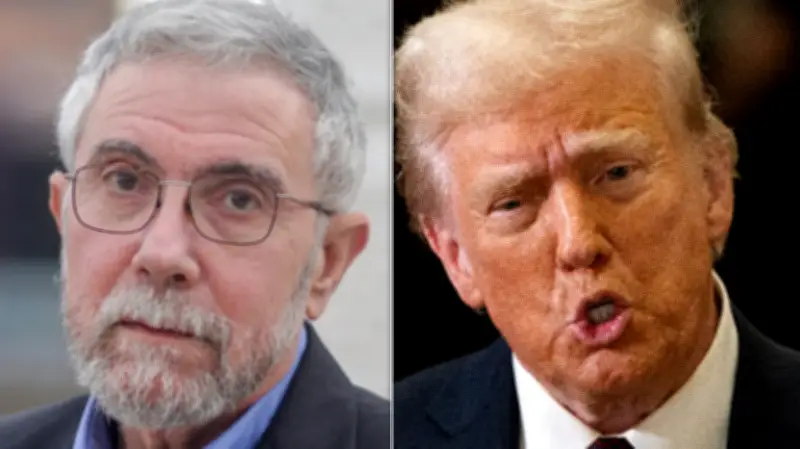
Nobel Prize-winning economist Paul Krugman on Wednesday detailed the broader economic consequences of former President Donald Trump and his family profiting from his presidency, warning that such behavior fosters a destructive form of crony capitalism.
Krugman Explains the Economic Toll of Corruption
Speaking on MSNBC's MS NOW, host Ari Melber asked Krugman to explain “the cost to the rest of us, the public, if the government is corrupt or captured, separate from the morality?” Krugman responded by highlighting the concept of crony capitalism, drawing parallels to Philippine dictator Ferdinand Marcos. He recalled a phrase common among his parents' generation: “It’s not what you know, it’s who you know.”
“It’s where success in business depends on having the right connections and having the favor of the leader, supreme leader, whatever, and that’s extremely destructive,” Krugman said.

Incentives Shift to Currying Favor
Krugman elaborated that such a system distorts business incentives. “It does mean that all of the incentives on business are to curry favor, not to actually be good at your business,” he continued. “And it’s especially bad if what it takes to curry favor is just who is best at funneling money to the president’s family and his friends.”
New financial disclosure forms reveal that Trump’s income surged to over $2 billion in 2025, with nearly $1.4 billion coming from cryptocurrency earnings. Krugman argued that under Trump, there has been an “abrupt collapse” of economic norms that reward productivity and the creation of real value “as opposed to just making the White House happy.”
Impact on the Broader Economy
The economist emphasized that when business success hinges on political connections rather than innovation or efficiency, the overall economy suffers. Resources are misallocated, competition is stifled, and long-term growth is undermined. Krugman’s analysis suggests that the costs extend far beyond mere ethics, affecting everyone through reduced economic dynamism and fairness.