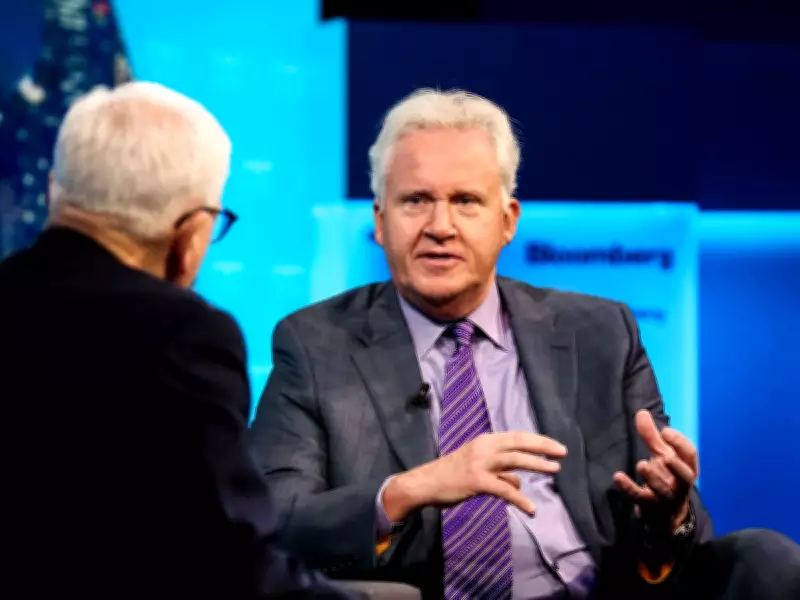
Former General Electric Co. boss Jeff Immelt is not the first ex-CEO to grapple with the loss of prestige and power. But an essay he posted this month about how he bounced back from feeling adrift stands out for its raw depiction of the sudden anonymity of post-corporate life for someone used to being a big shot.
“People looked at me differently, avoiding eye contact, as if someone close to me had died. Others just ignored me. My phone calls went unanswered,” he wrote in a 1,900-word Substack post detailing how he engineered a “turnaround” from a “bad personal cycle” that left him feeling sad and unmoored.
Immelt, who stepped down in 2017, also threw some barbs at his predecessor Jack Welch and accused former GE colleagues and members of its board, whom he did not name, of refusing to defend his performance. Immelt’s time as chief executive was marred by a drop in oil prices after he paid US$10 billion in 2015 for Alstom SA’s energy business, considered by some critics as one of his biggest mistakes in a tumultuous tenure that also included a near-blowup of GE Capital during the 2008 financial crisis.

“In some cases, the GE team turned its back on me, including some who knew the truth, but refused to speak it,” he wrote. (Immelt previously defended his record in his 2021 book, Hot Seat: What I Learned Leading a Great American Company.)
In a sea of self-serving leadership advice from ex-executives, Immelt’s missive is unusual in its candidness about a vulnerable period. “I was just sad,” he confessed. “I felt like I had let some people down, including my family.”
Suddenly, the man who led GE for 16 years and walked away with a package calculated at the time to be worth at least US$112 million was unsure what to do with himself.
“Importantly, I had to rebuild my confidence, to find someone who says, ‘you don’t suck,’” he wrote. He wanted to find a new purpose.
The catalyst for Immelt’s personal pivot, he said, was moving to California to join New Enterprise Associates as a venture partner, where he could “be anonymous, but still busy” advising startups while perched in an office that was, he confided, “the smallest I had had in 25 years.”
Immelt doesn’t like everything about the Golden State — “the government sucks,” he asserted — but working with Silicon Valley startups “was a better pursuit to create the future than private equity. There is a huge difference between thinking ‘growth first’ versus ‘cash first.’” Welch, notably, went into private equity after he stepped down from GE, becoming a senior advisor at Clayton, Dubilier & Rice in 2001. (He died in 2020.) Immelt also took a dig at Welch launching a for-profit management institute.
“For retired executives,” Immelt said, “it turns out that making money is easy; having a purpose is hard.”
Other leaders have acknowledged this. In an interview last year, Bridgewater Associates founder Ray Dalio said it was “a big change” when he stepped back from day-to-day management of the hedge fund he had run for decades and recounted talking to another recently retired business leader who called him for advice. Dalio didn’t name names but said the former executive reported walking through a grocery store wondering whether anyone else in the store knew how important he was, or used to be.