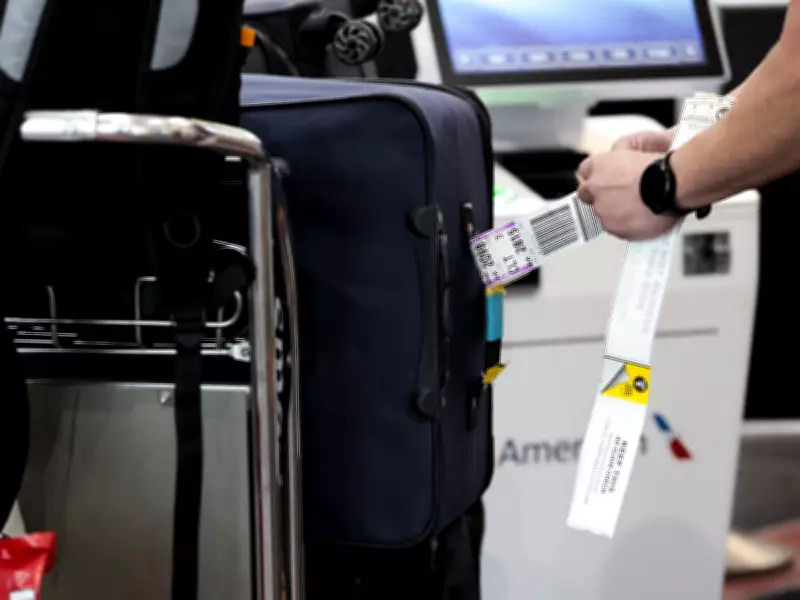
A recent investigation by CTV News revealed that at least 17 passengers departing from Canadian airports were detained on drug smuggling allegations in the past year after their luggage tags were swapped with suitcases containing illegal substances. This alarming trend highlights the need for travelers to take proactive steps to protect themselves.
What Is Tag Switching?
When you check your bag at an airport, it receives a tag that wraps around the handle, identifying it as yours. The Royal Canadian Mounted Police (RCMP) explains that baggage tag switching occurs when someone deliberately changes the labels on bags. A different piece of luggage is then identified as yours, while your own suitcase becomes ownerless and unclaimed.
How Is It Done?
The process takes only a few seconds, often out of sight of security cameras, and involves an unscrupulous airport worker making the switch. In one case last summer, the RCMP arrested and charged two Swissport baggage handlers attempting to smuggle over $147,000 worth of cannabis to France. The RCMP stated that each baggage tag tells airport machines where a bag should go and who it belongs to. In this instance, the tag was switched so that the cannabis-filled suitcase appeared to belong to an unknowing traveler.

A French national arrived in Paris and was detained by authorities on suspicion of importing cannabis from Canada. After further investigation, French authorities released the passenger without charges, and the case was referred to the RCMP Toronto Airport Detachment. The investigation revealed that the two baggage handlers, each with over 20 years of experience, had manipulated baggage tags without the passenger's consent.
Risks to Passengers
Being caught transporting drugs across international borders can lead to police investigation, imprisonment, or even a death sentence in some countries. In a case this year, RCMP officers were called after the Canada Border Services Agency found 33 kilograms of cannabis in each checked bag of two German citizens scheduled to depart from Toronto to Germany. The RCMP arrested them, but both denied ownership of the luggage. Investigators discovered that an Air Canada employee working in the baggage room had allegedly placed luggage tags bearing the passengers' names onto suitcases containing cannabis. Both passengers were released, and the Air Canada worker was arrested and charged.
How to Protect Yourself
Mitesh Shah, CEO of Empire Protection, a professional security company in Mississauga, Ontario, offers several suggestions to prevent tag switching and guard against theft or loss. These include:
- Use unique luggage tags: Choose distinctive tags that are hard to replicate or remove, such as those with locks or custom designs.
- Secure your bag: Use a TSA-approved lock to deter tampering.
- Add identifying marks: Place a distinctive sticker, ribbon, or other marker on your bag to easily recognize it.
- Check your tag at every step: Verify the tag on your bag matches your itinerary after check-in and before boarding.
- Consider tracking devices: Use a GPS tracker or Apple AirTag in your luggage to monitor its location.
- Report suspicious behavior: If you see someone handling your bag improperly, notify airport security immediately.
By taking these simple precautions, Canadian flyers can significantly reduce the risk of becoming unwitting participants in drug smuggling operations and ensure their belongings arrive safely at their destination.