For decades, the risky world of early-stage mining ventures was the playground of institutional funds and commodity trading houses. But after a more than 900 per cent rally in a little-known Canadian potash developer last year, a new class of investors is moving in: family offices.
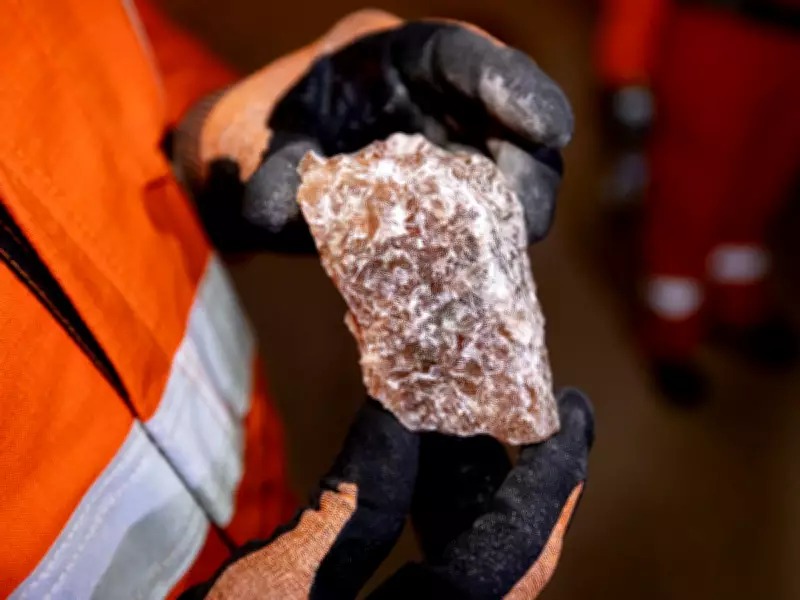
Millennial Potash Corp. has attracted a group of ultra-high-net-worth clans that are increasingly bypassing traditional funds to take direct stakes in critical resources. Potash, a potassium-rich salt, is a fertilizer for crops ranging from cereals to potatoes, helping boost yields and plant resilience. The Vancouver-area miner is developing a potash project in Gabon and has no other revenue.
Unusual Interest from Family Offices
“We have actually seen very unusual interest coming from family offices,” said chairman Farhad Abasov. “Usually, we don’t see a lot of this capital coming into the junior mining sector.”

The investment push is led by The Quaternary Group, a Singapore-based investment entity representing Ross Hamou-Jennings, the former Asia chairman of Cargill Inc., the commodities and agriculture giant. Quaternary owns roughly 25 per cent of the potash miner, and Hamou-Jennings is using his industry knowledge to bridge a valuation gap he identified in the company. He views potash as an essential, US$30 billion niche market where global powers like the United States and China lack self-sufficiency. The U.S. added potash to its list of critical minerals in November, boosting Millennial’s shares.
Strategic Investments in Critical Resources
The Banio project plans to use the deep-water port at Mayumba, along the west coast of Africa. That will allow shipments to reach major markets like Brazil while bypassing traditional choke points, according to Millennial’s website.
Despite a roughly one-third pullback after last year’s 900 per cent surge, the company maintains a market value of $281 million. SCP Research rates the stock a “buy,” banking on Abasov’s proven track record at Potash One and Allana Potash to drive the next phase of growth.
Another backer is Hong Kong’s Cavendish Investment Corp. This multi-family office, which generally invests between US$5 million and US$50 million, views fertilizers as strategic assets critical to navigating increasingly fractured global supply chains.
Growing Trend Among Wealthy Families
These firms are part of a growing club of private wealth that prefers direct ownership over managed funds. Colombia’s richest man, Jaime Gilinski, has repeatedly increased his stake in independent oil and gas producer GeoPark Ltd., seeing it as a vehicle to enter Venezuela’s recovering energy sector. Similarly, the heirs of Swedish tycoon Adolf Lundin spent nearly $40 million in March to boost holdings in copper and diamond miners amid supply-chain squeezes.
Beyond Quaternary and Cavendish, Millennial Potash’s investor list is populated by family offices operating just below public disclosure thresholds. The company has attracted investments from a Canadian family office, a U.S.-based office and another wealthy family from the Persian Gulf, all holding just under five per cent, according to Abasov. He is talking to family offices in Hong Kong and Singapore to drum up more investor interest.