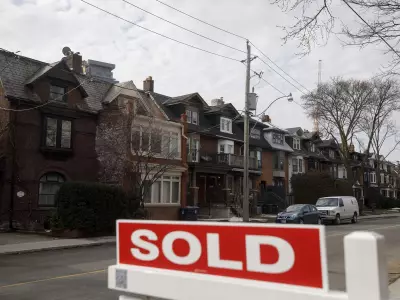
Home prices continue to fall or remain flat in major centres across Canada, creating a potential predicament for those counting on their homes as part of their retirement plans.
Current Market Trends
The Toronto Regional Real Estate Board reported that in Canada's largest city, the average selling price was $1,051,969 in April, down 4.9 per cent from a year earlier. Based on the index, prices have fallen more than 20 per cent from the peak. Similarly, Vancouver house prices were off almost seven per cent from a year ago in April.
For the fourth quarter of 2025, household residential real estate was down 0.2 per cent from a year ago to $8,450.6 billion, according to the latest data from Statistics Canada. The good news is that at the same time, the value of all assets, minus all liabilities, increased for Canadians by $230.2 billion to $18,594.9 billion.

Wealth Inequality and Market Impact
Wealth is not spread evenly across Canada, with 20 per cent of the country holding about 65 per cent of the net worth, according to Statistics Canada. Many have benefited from an S&P/TSX Composite index that was up 28.2 per cent in 2025 and is up about another seven per cent this year.
The problem is for those who have a lot of their wealth tied up in their principal residence and may be looking to tap into that money at some point in their retirement. It's just not worth as much now.
Expert Opinion on Retirement Planning
Robert Kavcic, a senior economist with Bank of Montreal, said pockets across markets can differ, but some cities such as Toronto and Vancouver could see prices staying flat or going down. 'Incomes have to catch up to affordability,' he said.
If your home is 50 per cent of your net worth — which might not be unusual for someone with a detached home worth $1 million or $2 million in Toronto or Vancouver — should you lose $200,000 to $400,000, how much would your retirement thinking change?
The equity growth older Canadians have already built may not materially affect the retirement income from their homes, said Kavcic. 'Anyone near retirement age (has) more than a decade of equity (growth), so you are scraping off 20 per cent but you probably didn't set your retirement plan based on five years ago,' he said. Housing wealth is like paper wealth on your balance sheet and doesn't change your cash flow, he added.
However, it is risky to count on downsizing to fund retirement, said certified financial planner Jason Heath. 'In practice, I see a lot of retirees who age in place and don't downsize. Even those who figured they would downsize in retirement earlier on in their financial lives, (don't),' he said. 'Something that I worry about a little is people holding on for a recovery in hopes of timing the market.'