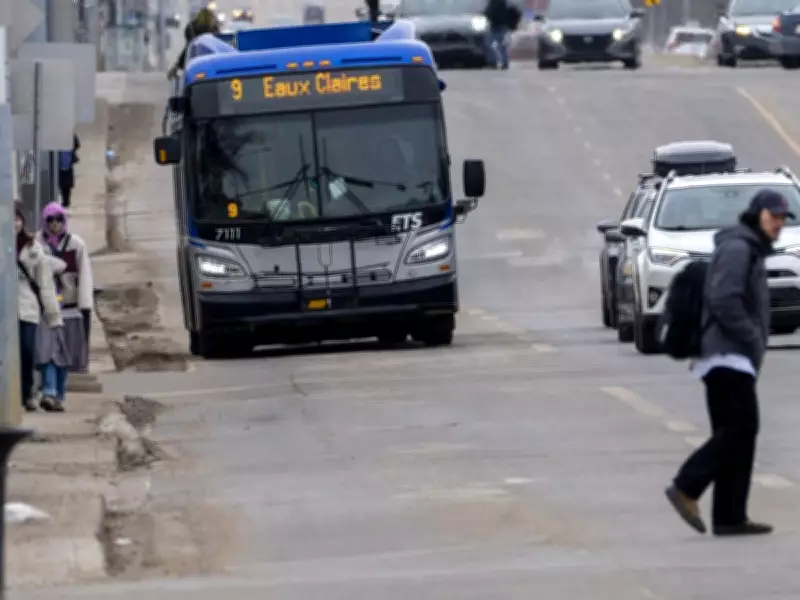
Edmonton city council's urban planning committee has begun brainstorming transit funding, presented with stark data and dire service scenarios. The Edmonton Transit Service (ETS) offered three options for bus fleet renewal, a critical need to maintain current service levels through 2030.
Sarah Feldman, director of transit planning, ridership and revenue, presented a report requested in 2024 outlining bus renewal requirements. The ETS conventional bus fleet consists of 983 buses, including 879 40-foot buses, along with a smaller number of larger 60-foot articulated buses and smaller 30-foot buses for specific routes.
Fleet Renewal as a Driver of Service Reliability
“Fleet renewal is a driver of service reliability. A younger fleet will experience fewer issues with vehicles breaking down and running late. An older fleet also requires more time in the garage for maintenance and repairs, which means less time on the road for delivering service,” Feldman said.

The North American average for retiring 40-foot buses is 15.1 years, with 81 per cent of these buses adhering to a 12-year standard. In Edmonton, buses are currently retired at 24 years, and more than half of the bus fleet is rated in poor condition.
Current Fleet Renewal Plan and Challenges
The current fleet renewal plan involves midlife refurbishment for conventional 40-foot buses around the nine-year mark, helping maintain a longer useful life. Over the last 17 years, ETS has consistently replaced an average of 48 conventional buses per year, with exceptions in 2007 and 2009 when 355 buses were purchased—more than one-third of the fleet.
“When we buy buses in big numbers like this at once, it puts pressure on future budgets to maintain that same level during replacement, which is what we’re seeing now with those bus orders,” Feldman said.
In 2023, ETS started a “second life extension program,” putting buses on life support. In the first option, where ETS cannot meet minimum requirements, immediate service impacts occur. All capital funding goes to the midlife program, and without bus replacements, the city would be forced to remove 100 of the 40-foot buses from the fleet, retiring them in 2027.
“That would mean a reduction of 331,000 annual service hours, which is the equivalent of 13 per cent of total conventional transit service,” Feldman said. “We would also need to remove all of the 30-foot buses, which means that several community bus routes must be canceled, such as routes to travel on private property of commercial centres and seniors facilities. These routes can only operate with a smaller bus as they travel in more constrained areas with tight turning movements and pavement structures that can’t accommodate a bigger bus.”
Councillors voted not to defer the decision, emphasizing the need to avoid short-changing transit. The committee will continue discussions on funding scenarios to address the “desperately needed” bus replacements.