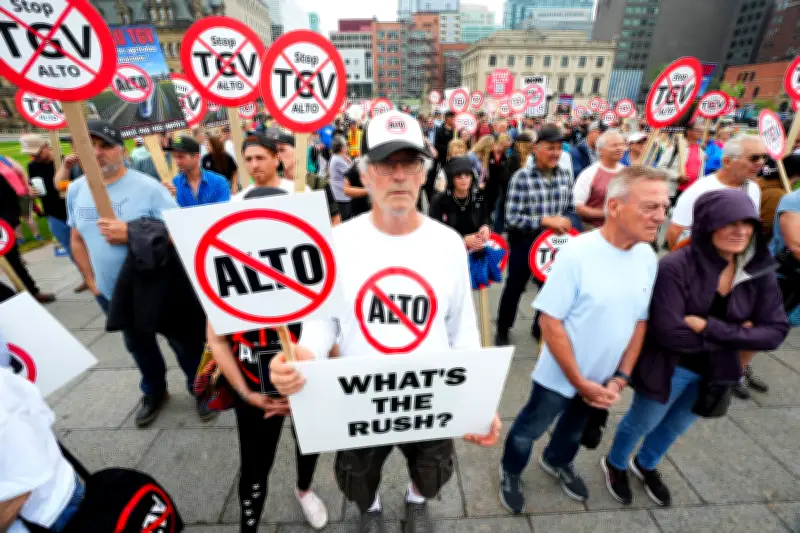
A new Nanos survey shows Canadians are sharply divided over whether the proposed Alto high-speed rail line should be a top government priority. The poll, conducted for CTV News, found that 48% of respondents consider it a high or medium priority, while 49% view it as a low priority or say it should not be a priority at all.
Regional and Partisan Divides
Support for the project is strongest in Ontario and Quebec, where the rail line would run, with 56% and 54% respectively calling it a high or medium priority. In contrast, only 36% in the Prairies and 41% in British Columbia feel the same way. Atlantic Canada sits in the middle at 46%.
Partisan differences are also stark. Liberal and NDP supporters are more likely to back the project, while Conservative supporters are more skeptical. Among Liberal supporters, 64% say it is a high or medium priority, compared to 52% of NDP supporters and just 30% of Conservative supporters.

Government Pressure for Kingston Stop
The federal government is urging Alto to consider adding a stop in Kingston, a move local politicians have long advocated for. Kingston Mayor Bryan Paterson said, 'We believe a stop in Kingston would be a huge economic driver for the region and connect our community to the rest of the corridor.' The government is expected to make a final decision on the route and stops later this year.
Cost and Timeline Concerns
The Alto project, estimated to cost between $6 billion and $12 billion, would connect Toronto, Ottawa, Montreal, and Quebec City with trains traveling up to 200 km/h. Critics question the price tag and timeline, with construction not expected to begin until 2030 at the earliest. Transportation analyst David Jeanes noted, 'High-speed rail has been studied for decades in Canada, but we have yet to lay a single kilometer of dedicated track. The cost overruns and delays seen in other countries should give us pause.'
Supporters argue the project will reduce greenhouse gas emissions and ease congestion on Highway 401. The survey suggests Canadians remain unconvinced, with many prioritizing other infrastructure needs like roads and public transit.