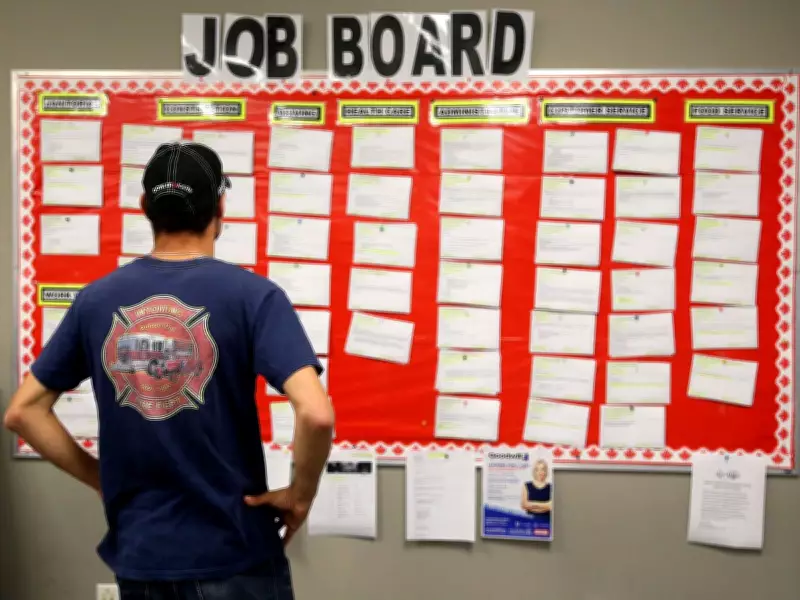
Canada's labour market has experienced its worst start since the Great Recession of 2009, excluding the pandemic period, with 112,000 jobs shed in the first four months of 2026. However, economists at the Royal Bank of Canada suggest that the situation may not be as dire as it appears, pointing to key underlying trends that indicate resilience.
Tariffs Take a Toll, but Weakness Is Contained
There is no denying that U.S. tariffs imposed by Donald Trump have cost Canadian jobs. According to RBC, U.S. demand accounted for 12 per cent of total employment in Canada in 2024, rising to 41 per cent in manufacturing and over two-thirds in the auto and aluminum sectors. Since February 2025, employment in these tariff-sensitive sectors has dropped by two per cent. However, RBC senior economist Claire Fan notes that this weakness has not spread to the broader economy. In other areas, employment actually grew by one per cent over the same period.
Domestic Demand to Support Growth
RBC expects tariffs to continue pressuring exposed sectors, but believes increased spending by consumers, businesses, and governments will support growth in the remaining 90 per cent of jobs that focus on domestic demand. This domestic cushion is a key reason for cautious optimism.

Low Hire, Low Fire: A Different Kind of Weakness
The job losses that raised eyebrows in three of the first four months were not primarily due to layoffs. In fact, layoffs have fallen by 10 per cent between October 2025 and April 2026. Instead, the labour market is characterized by a "low hire, low fire" dynamic, as described by Fan. It is not that people are losing jobs en masse; rather, it has become harder to find new ones. Weak hiring has left many entrants—especially young Canadians—without work, and the share of new jobs hit a near-record low in April.
Hidden Unemployment Remains Contained
One encouraging sign is that "hidden unemployment"—where people can only find part-time work or become discouraged and drop out of the workforce—appears contained. RBC's analysis found no evidence that Canadians, including young job seekers, are giving up their job searches en masse. While longer job searches are concerning, Fan emphasizes that they do not flag the same kind of layoff-driven weakness typically seen at the start of a recession.
Hiring Demand May Be Picking Up
Despite recent uncertainty around the Iran war and rising fuel prices, hiring demand may be improving. A Canadian Federation of Independent Business survey showed that the number of small and medium-sized businesses expecting to add jobs in the coming months continued to rise in April. Whether this translates into actual job growth remains to be seen, but another force is at play: slower immigration and an aging population.
Demographic Shifts at Work
After the federal government clamped down on immigration numbers in 2025, Canada's workforce began to age. This spring, the labour force participation rate hit its lowest level since 1997, excluding the pandemic, as a record number of Canadians retired. This demographic trend could tighten the labour market further, potentially supporting wages and job stability for those who remain.
In summary, while the headline job losses are alarming, RBC's analysis suggests that the Canadian job market is not as weak as it appears. The combination of contained layoffs, stable domestic demand, and demographic shifts may provide a foundation for recovery, even as tariff-related challenges persist.