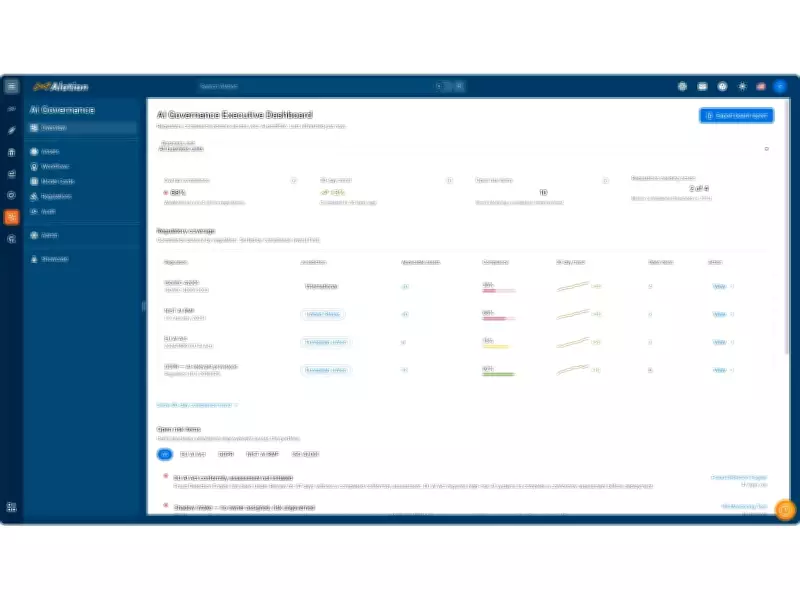
As enterprise adoption of artificial intelligence outpaces governance frameworks, Alation Inc. has announced a new solution to help organizations manage AI compliance. The company unveiled Alation AI Governance at the Gartner Data & Analytics Summit in London on May 11, 2026. This offering provides enterprises with a centralized system of record for all AI models, agents, and tools, addressing the growing gap between AI deployment and regulatory oversight.
The Compliance Challenge
Enterprises are deploying AI faster than they can govern it. Chief Data Officers and their teams often spend weeks manually assembling evidence when boards or regulators request compliance information. AI approval workflows are scattered across email threads and SharePoint pages, and model documentation quickly becomes outdated. There is currently no reliable system of record for AI approvals, and regulators are demanding one.
How Alation AI Governance Works
Alation AI Governance addresses these issues by registering every AI asset into a single inventory. The solution maps each asset to applicable regulations, generates evidence-backed model cards, routes approvals through regulation-aware workflows, and produces a live compliance posture for executive teams on demand. Key capabilities include:

- AI Asset Registry: A single inventory of all models, agents, and tools across the enterprise. Assets are ingested from connected platforms or submitted via SDK, with searchable profiles and lineage to upstream data dependencies.
- AI-Native Model Cards: Generated from asset metadata, data dependencies, and regulatory requirements. Every field cites its source, and evidence-based completeness shows what is verified versus what needs review.
- Agentic Governance Workflow: Approval routing driven by regulation applicability. High-risk assets under the EU AI Act route to Legal and CISO, while NIST-only assets follow a standard chain. Missing evidence creates remediation tasks linked to gaps, and all actions are logged in an append-only audit trail.
- Regulation Registry: Built-in support for key frameworks including the EU AI Act, GDPR AI-relevant subsets, NIST AI RMF, and ISO 42001. Teams can incorporate additional regulations with AI-assisted suggestions to accelerate requirement mapping.
Regulatory Pressures Mount
Regulations are compounding the compliance burden. The EU AI Act imposes documentation requirements for high-risk AI systems. NIST AI RMF is becoming a U.S. procurement baseline, and ISO 42001 is a growing certification target. U.S. state-level AI acts are being enacted across jurisdictions. For enterprises operating across regions, each new regulation adds tracking and audit obligations that manual processes cannot sustain.
About Alation
Alation Inc. is a knowledge engine that powers enterprises to achieve business outcomes. The company is headquartered in London and serves clients globally. This announcement underscores Alation's commitment to helping organizations harness AI responsibly while meeting evolving regulatory demands.