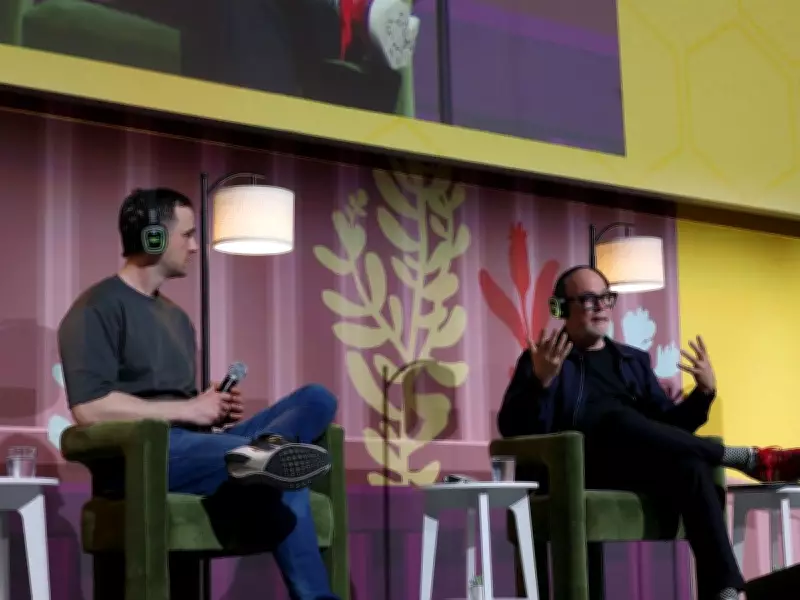
Business leaders in Edmonton heard this week that, in the rush to board the AI hype train, most aren't leaving the station. At the Upper Bound AI conference, experts highlighted significant challenges in adopting artificial intelligence effectively within companies.
Misconceptions About AI Success
Peter Bishop, chief innovation officer at ZGM, an Alberta advertising agency, said, "The biggest misconception right now is that AI is being wildly successful with companies." He referenced a study by ZGM and market researcher Stone-Olafson on AI use in the Canadian marketing industry. The study found that while AI is being adopted, many companies cannot prove any financial benefit or trackable efficiencies. Only 21% of marketers reported a high impact of AI on their daily work, and just 3% fully trusted AI outputs. About 43% were unsure if AI increased return on investment at all. These findings align with other research, including an MIT study showing that 95% of companies initiating AI projects fail.
Cultural Shift and Generational Divide
Bishop noted a novel aspect of AI adoption: executives and leadership are jumping into the technology "head first," while younger junior staff are more cautious. "There's this cultural shift that you have to be really aware of when you're trying to ram AI down the company's throat," Bishop said. "When you understand that this is super threatening, unless you have permission from the company to do so, you are really starting with one foot behind the other."

Trevor Bruintjes from CopperTeams acknowledged that some jobs are at risk but emphasized that AI will never replace humans. "There's going to be changes in roles, people are going to have to adjust, the winners are going to be the ones that have the AI skills plus the knowledge, the experience, the education," he said. Bruintjes and Bishop agreed that AI is best suited for automating menial, boring tasks, freeing up time for more creative and fulfilling work.
New Education Tools for AI Adoption
The event, held at the Edmonton Chamber of Commerce, featured Bishop, chamber president and CEO Doug Griffiths, Alberta's technology and innovation minister Nate Glubish, and Bruintjes. They announced the launch of new education tools to help Edmonton companies adopt AI effectively. Bishop told the audience there is a big disconnect between what works and what doesn't in AI implementation.
Mark Surman, president of Mozilla, and Cam Linke, CEO of the Alberta Machine Intelligence Institute (Amii), also spoke at the Upper Bound conference. Surman argued that using open source AI models can give businesses an advantage in adoption.