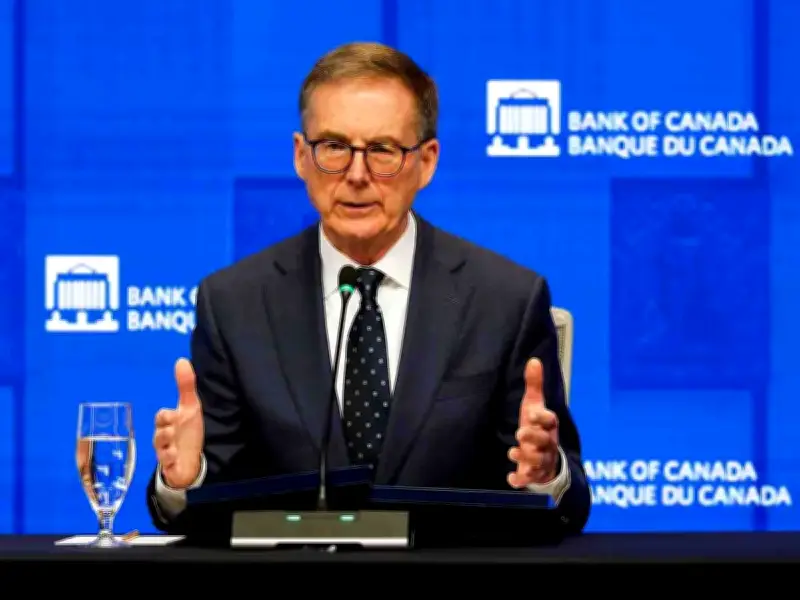
The Bank of Canada held interest rates at 2.25 per cent on Wednesday as it attempts to balance the risks of a slowing economy against higher inflation, but one economist believes the central bank may be closer to ending its five-decision-long pause, with September marking a potential turning point.
Signs of a Shift in Monetary Policy
According to Jay Zhao-Murray, chief economist at independent macroeconomic researcher Sibley Creek, the bank is approaching the end of its pause and is awaiting data to determine the next move. In a note released on Wednesday, he highlighted several indicators suggesting a change is imminent. Notably, the bank dropped the word “appropriate” from its statement regarding the current rate level and removed the phrase “changes in the policy rate can be expected to be small,” which had been present in the April 29 statement.
“The tell is that today’s hold was framed purely as a balance of risks,” Zhao-Murray said. He explained that the Bank of Canada emphasized the “conundrum for monetary policy” created by slow growth and rising inflation resulting from the Iran conflict. The central bank worries that higher interest rates could further slow the economy, while cutting rates might fuel inflation.

September: A Decisive Moment
Zhao-Murray expects that by September, the Bank of Canada will have enough information to determine which scenario holds the upper hand: a stagnating economy undermined by trade troubles with the United States, or inflation spreading beyond gas pumps to other consumer prices. The former could necessitate rate cuts, while the latter might invite hikes. “Back in April, the bank held rates out of patience — looking to buy time and wait out the oil price shock,” he said. “Today, it held rates out of a tension between two opposing forces.”
Once the bank decides which scenario dominates, a rate cut or hike could accompany the October monetary policy report, Zhao-Murray added.
Divergent Views Among Economists
Not all economists agree with this assessment. Derek Holt, head of Scotiabank Capital Markets Economics, argues that the Bank of Canada is overemphasizing the effects of the trade conflict. He notes that approximately 90 per cent of exports to the U.S. enter duty-free, and Canadian exporters benefit from a depreciating Canadian dollar. Holt also criticizes Governor Tiff Macklem for ignoring rising prices of other commodities besides oil and natural gas, calling this “just plain wrong.”
Scotiabank forecasts the interest rate will rise to three per cent by year-end. In contrast, most other major banks expect rates to remain on hold throughout 2026. However, markets have fully priced in one rate hike this year, based on Bloomberg’s overnight interest rate swap data.
What to Watch For
Zhao-Murray noted that Macklem provided clues about the factors he will monitor when upgrading the importance of inflation. These include core inflation, the share of consumer price index (CPI) components rising faster than three per cent, and medium- and long-term inflation expectations. The coming months will be critical in determining the Bank of Canada’s next policy move.