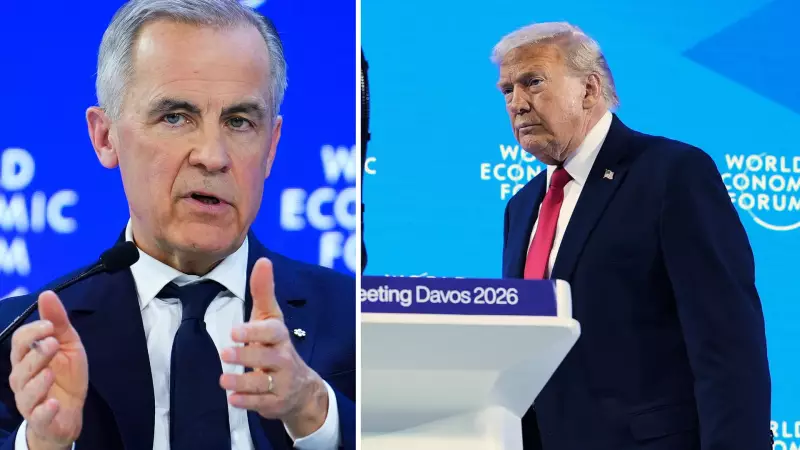
Former Central Bank Chief Challenges Trump's Characterization of Canadian Economy
In a notable rebuttal to recent political rhetoric, Mark Carney, the former Governor of the Bank of Canada, has firmly dismissed claims made by Donald Trump regarding Canada's economic dependence on the United States. Carney's response comes amid heightened discussions on international relations and economic sovereignty.
Carney's Rebuttal to Trump's Assertion
Carney, who served as the head of Canada's central bank from 2008 to 2013 before leading the Bank of England, addressed Trump's comment that Canada "lives" because of the U.S. He emphasized Canada's robust and self-sustaining economy, which stands on its own merits rather than relying solely on its southern neighbor. Carney pointed to Canada's diverse economic sectors, including natural resources, technology, and manufacturing, as evidence of its independent vitality.
This exchange highlights ongoing tensions in Canada-U.S. relations, particularly concerning trade and economic policy. Carney's remarks serve as a defense of Canada's economic resilience and its role on the global stage.

Context of the Political Dialogue
The incident occurs within a broader political landscape where cross-border statements can influence diplomatic and economic perceptions. Trump's comment, made in a public forum, has sparked debate among policymakers and analysts about the nature of the bilateral relationship.
Carney's response is seen as a strategic move to reaffirm Canada's economic autonomy, especially as both nations navigate post-pandemic recovery and evolving trade agreements. His expertise in financial governance lends weight to his counterargument, drawing on his experience in managing monetary policy during global crises.
Implications for Future Relations
This public disagreement may impact future collaborations between Canada and the United States, particularly in areas like trade negotiations and environmental initiatives. Carney's stance underscores the importance of mutual respect in international partnerships, rather than perceptions of dependency.
As economic indicators continue to evolve, such dialogues remind citizens and leaders alike of the complex interdependencies that define global economies, while also celebrating national strengths.