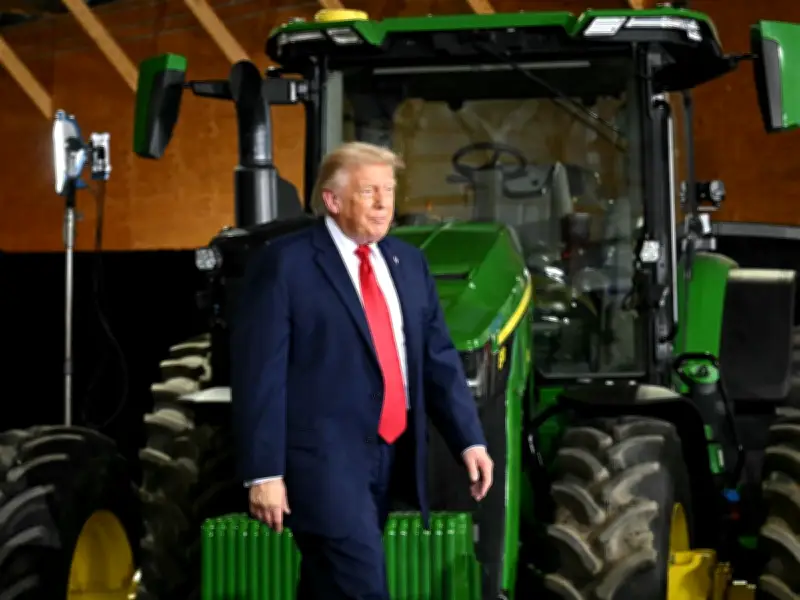
President Donald Trump surprised farmers invited to a White House dinner on Thursday with a request to Congress for US$11.1 billion in assistance, marking the second bailout of the year for the struggling agriculture sector.
Details of the aid package
The appeal is part of a supplemental funding package that includes defense spending. It seeks US$10 billion in assistance for growers of crops such as corn, soybeans and rice, along with US$1.1 billion for Florida producers affected by winter storms in late 2025 and early 2026.
This new request follows a separate US$12 billion package announced in December, which started paying out earlier this year. Combined, the two packages would total roughly US$23 billion, matching the amount paid to farmers for trade disruption losses during Trump's first term.

White House initiatives to woo farmers
The aid request was one of several items rolled out by the administration this week to court farmers, a key political constituency hurt by Trump's sweeping global tariffs and the war with Israel against Iran. Late Thursday, the White House released an executive order aimed at bolstering regenerative agriculture.
At the dinner, Trump promised that Iran's rebuilding after the war could benefit American farmers. “The Islamic Republic of Iran, they’re having a hard time with food, and we’re going to be taking some of their money, and we’ll spend it, and we’re going to be buying wheat and soybeans,” Trump said. “That process is going to be starting pretty soon. It’s going to be pretty big too. I think it’s going to be very big.”
Impact of tariffs and war on farmers
The Iran war has resulted in soaring costs for fuel and fertilizer, further squeezing farmers already dealing with Trump's tariff regime that crimped U.S. crop exports to China and raised prices for imported raw materials. While oil and fertilizer prices have been falling amid hopes for the reopening of the Strait of Hormuz, and China has resumed buying American soybeans, many farmers need higher crop prices to turn a profit.
Prices for corn, the largest U.S. crop, dropped to just US$4.315 a bushel for the autumn harvest, a fresh contract low on Thursday before prices turned higher.
Reactions from the farming community
Scott Metzger, an Ohio grower and president of the American Soybean Association, said, “It is no secret that farm country is struggling, and this temporary economic support will go a long way to provide farmers with economic stability.”
However, Nebraska farmer Ben Steffen expressed skepticism. “The last time they sent us some relief like this, we got a check for what amounted to US$25 an acre,” he said, a fraction of his budget to raise corn. “That US$25 is gone in a whisper.” Steffen added that a broader approach is needed: “We need a trade policy that’s coherent, that’s consistent.”