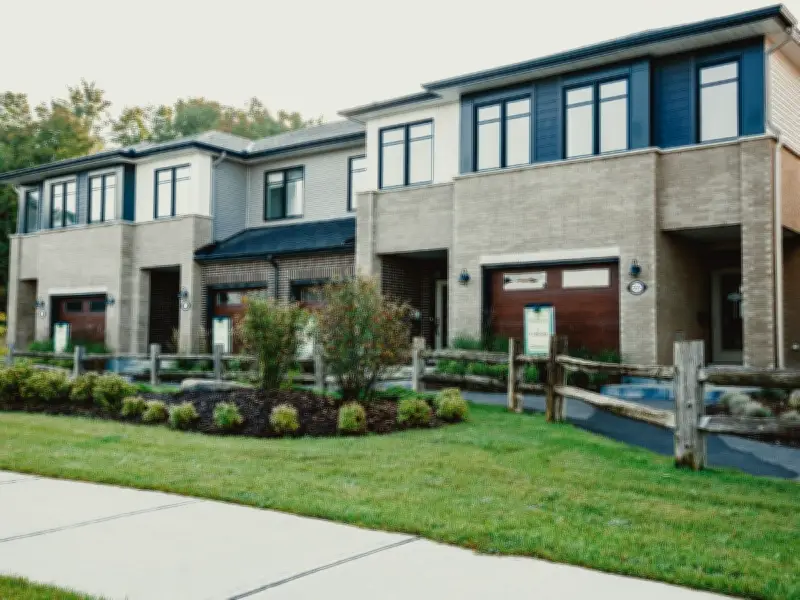
At a market forecast update to the housing industry earlier this spring, Francis Cortellino, a real estate economist at Canada Mortgage and Housing Corporation (CMHC), underlined with hard numbers something the industry had been noticing for some time: single-family home construction is at an historic low and forecast to remain low, while townhome construction is increasing.
Shift in Housing Starts
“When you look at Ottawa, what is being built for the missing middle — typically housing that is between single-family homes and high-rises — is mostly only row homes,” he said, while showing a chart of how low housing starts have become in the city, particularly for singles. For the first quarter of 2026, there were 390 row home (or townhome) starts and 260 single-detached home starts. CMHC defines a housing start as when the excavation is done and the concrete for the foundation is poured.
Market Sales Data
Similarly, industry analyst PMA Brethour Realty Group, which publishes monthly new-home market reports in partnership with the Greater Ottawa Home Builders’ Association, has reported that for the first quarter of 2026, there were 456 townhome sales versus 306 single-family home sales. This trend of townhomes claiming at least 50 per cent of the market share has been consistent since 2022. Previously, it was more common to see singles and towns jockeying for the sales lead from month to month.

Even in the resale market, there’s evidence of the popularity of townhomes. For instance, in the first quarter of this year, townhome sales rose four per cent versus the same quarter last year, while single-family home and apartment sales dropped by seven per cent and 22 per cent respectively, according to CMHC.
Factors Driving the Trend
There are several factors at play, including trade tensions, an uncertain economy, lower immigration, municipal policy directives advocating densification in housing, and elevated development charges and construction/land costs leading to significant increases in home prices through the pandemic. Even though some of those costs have cooled, they did not return to pre-2020 levels, notes Kyrie Warren, sales manager for Tartan Homes, “so the structural cost to build a home levelled out much higher than before.”
Builder Perspectives
Michelle Taggart, president of Tamarack Homes, also points to when the “entire market fell off a cliff” in 2023, thanks to those higher costs coupled with sharp interest rate hikes. “Almost all the builders stopped selling single-family homes. It took several years for material and labour prices to stabilize, and for prices to eventually come back down. With higher interest rates between then and now, people have been looking for the best price they could find. The market shifted into townhomes, walk-ups, back-to-back towns and semis. Most of us were doing less than half the sales from the years before.”
Evolution of Townhome Design
Many of today’s townhomes have evolved to offer increased square footage, flexible layouts and the feel of living in a single. Basements in many models come finished for extra living space. Flex spaces, like upstairs lofts, provide more ways to meet family needs. This housing type is seen as the logical solution because they pack more homes into an acre while giving families a front door and a backyard.