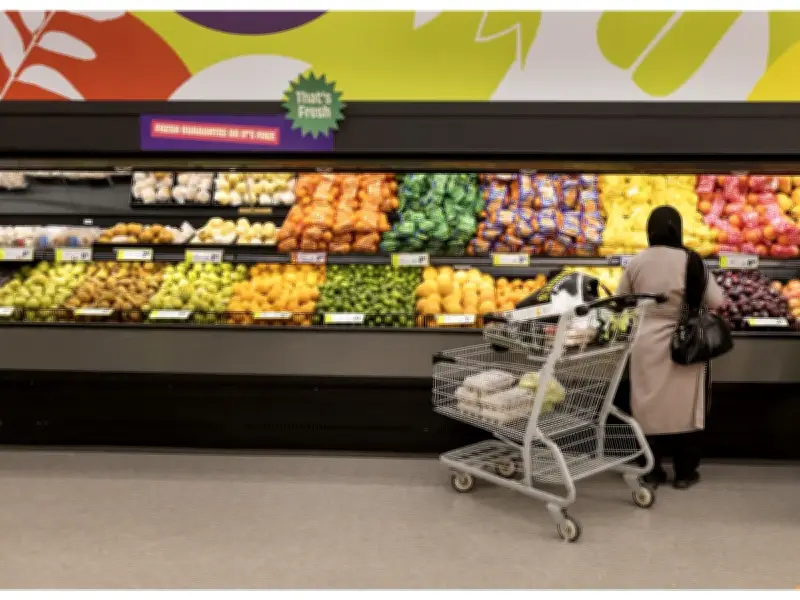
The federal government’s new National Food Security Strategy, valued at roughly $3.2 billion over ten years, is one of the most significant food policy announcements in recent memory. It signals that Ottawa finally recognizes what Canadians have been experiencing for years: food affordability matters, supply chains matter, and domestic food production matters.
Worthwhile Initiatives in the Strategy
The strategy contains several worthwhile initiatives. Ottawa plans to invest $750 million over seven years in controlled-environment agriculture, including greenhouses and vertical farms. The objective is to grow more fruits and vegetables domestically and reduce Canada’s dependence on imports. This makes sense. Canadians currently rely on imports for most fresh produce, and with our dollar worth roughly 14% less than it was five years ago, reducing exposure to exchange-rate volatility is prudent.
The government is also committing $1 billion through Farm Credit Canada to support large-scale food processing projects. This addresses a longstanding weakness in Canada’s agri-food economy. Too often, we export raw commodities only to import value-added food products produced elsewhere. Expanding domestic processing capacity should be a national priority.

Another promising measure is the $1 billion earmarked for food infrastructure, including food terminals and regional food hubs. Independent grocers have long operated at a disadvantage compared with larger chains, facing higher procurement, logistics, and distribution costs. Strengthening regional food networks and improving access to infrastructure could enhance competition and consumer choice while making the food system more resilient. It is unlikely to lower food prices dramatically in the short term, but it addresses a genuine structural weakness in Canada’s grocery sector.
Additional measures include enhanced funding for the Competition Bureau to investigate anti-competitive practices in food retailing and temporary exemptions to facilitate interprovincial meat trade, allowing smaller livestock producers to access new markets more easily. These initiatives deserve recognition. For years, Canada’s food policy lacked ambition. Investments in processing capacity, greenhouse production, logistics infrastructure, and internal trade are all worthwhile objectives.
Strategy Needs Vision and Commitment
But despite its title, this is not really a food security strategy. A strategy requires a clear vision, measurable objectives, and a long-term commitment. What Ottawa has unveiled is better described as a collection of investments. The numbers tell part of the story. Canada’s new plan amounts to roughly $320 million annually, or about $7.80 per Canadian per year. For comparison, even excluding SNAP and other nutrition programs, the U.S. Farm Bill spends between US$75 and US$120 per person annually on agriculture, crop insurance, conservation, rural development, and competitiveness. Canada is operating on an entirely different scale.
More importantly, Canada does not have a food security problem. We are one of the world’s largest agri-food exporters. Canadian farmers produce far more food than Canadians consume. Our challenge is not food availability. It is competitiveness. For years, Canada’s agri-food sector has struggled with weak productivity growth, labour shortages, regulatory complexity, insufficient processing capacity, infrastructure bottlenecks, and underinvestment in innovation. These are the factors that ultimately influence affordability and resilience.
What remains missing in Ottawa’s plan is a comprehensive national strategy focused explicitly on productivity and affordability. Every new regulation affecting the food sector should be evaluated through a food-affordability lens. Governments routinely assess fiscal and environmental impacts; they should also assess how policies affect the cost of food for consumers.

Productivity Growth a Powerful Tool
Canada must accelerate the adoption of automation, artificial intelligence, precision agriculture, and advanced manufacturing technologies throughout the food supply chain. Productivity growth remains the single most powerful tool available to improve affordability over the long term. Farm Credit Canada should also play a much larger role in supporting agri-food startups, scale-ups, and accelerator programs. The next generation of Canadian food champions will emerge from innovation ecosystems, not government subsidies alone.
Perhaps most notably, the strategy is remarkably silent on supply management. Dairy, poultry, and eggs account for roughly one-fifth of Canada’s farm cash receipts. Whether one supports the system or not, any serious discussion about competitiveness, trade, food affordability, and growth should at least acknowledge its role. The omission is particularly surprising given growing global demand for animal protein. Canada enjoys an enviable reputation for quality, safety, and sustainability. Rather than treating supply-managed sectors as untouchable, policymakers should be discussing how these industries can contribute to Canada’s growth ambitions and expand their presence internationally.
The government’s plan is a positive step. It demonstrates that Ottawa is paying attention to food systems in a way it has not for decades. But food security cannot be purchased through government spending alone. It is earned through investment, innovation, productivity, and competitiveness. Until we recognize that distinction, food affordability will remain far more elusive than food security.
Sylvain Charlebois is director of the Agri-Food Analytics Lab at Dalhousie University, co-host of The Food Professor Podcast.