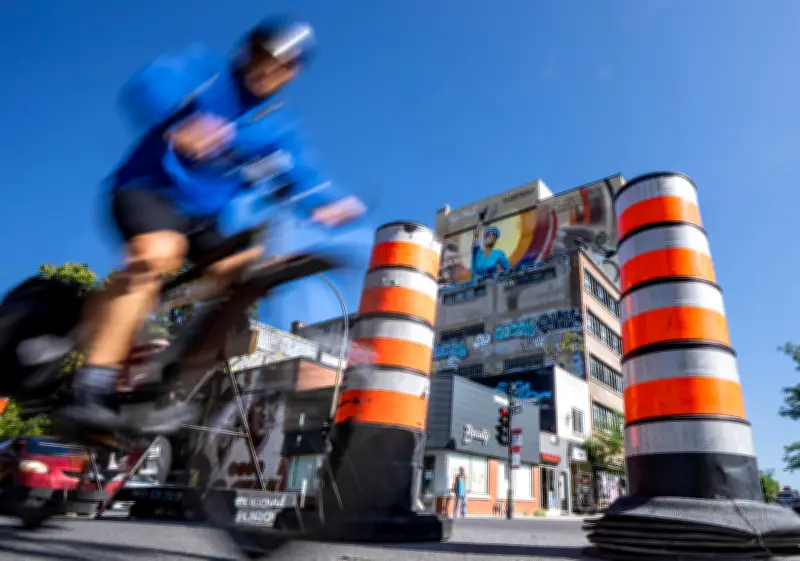
Montreal police have handed out over 9,500 tickets to cyclists in the past year, according to data released by the city. The tickets were issued for a range of infractions, including running red lights, failing to stop at stop signs, and riding on sidewalks. The enforcement blitz is part of a broader effort to improve road safety for all users.
Enforcement Details
The Montreal Police Service (SPVM) reported that between June 2025 and June 2026, officers issued 9,523 tickets to cyclists. The most common violations were running red lights (3,200 tickets), failing to yield to pedestrians (2,100 tickets), and riding on sidewalks (1,800 tickets). Other infractions included cycling without lights at night and using headphones while riding.
According to SPVM spokesperson Jean-Pierre Brabant, the increased enforcement aims to reduce collisions and protect vulnerable road users. “Cyclists must follow the same rules as motorists to ensure everyone’s safety,” Brabant said. “We’ve seen a rise in bike usage, and with that comes a need for greater compliance.”

Impact on Cyclists
The crackdown has drawn mixed reactions from Montreal’s cycling community. Some cyclists argue that the city’s infrastructure forces them into unsafe behaviors. “The bike lanes are often blocked or poorly designed, so we have to use the sidewalk or take risks,” said Marie-Claude Lefebvre, a daily cyclist. Others support the enforcement, saying it improves accountability.
Fines range from $80 to $200 depending on the infraction. The city has also invested in new bike lanes and signage to encourage safe cycling. Montreal’s cycling network now spans over 800 kilometers, making it one of the most extensive in North America.
Broader Safety Campaign
The ticketing blitz is part of a larger road safety initiative called “Vision Zero,” which aims to eliminate traffic fatalities by 2030. The program includes education campaigns, infrastructure upgrades, and targeted enforcement. In 2025, Montreal saw 12 cyclist deaths, down from 18 in 2024, according to city data.
Mayor Valérie Plante emphasized the importance of shared responsibility. “We want to make streets safe for everyone—drivers, cyclists, and pedestrians,” Plante said. “Enforcement is just one tool; we also need better infrastructure and awareness.”