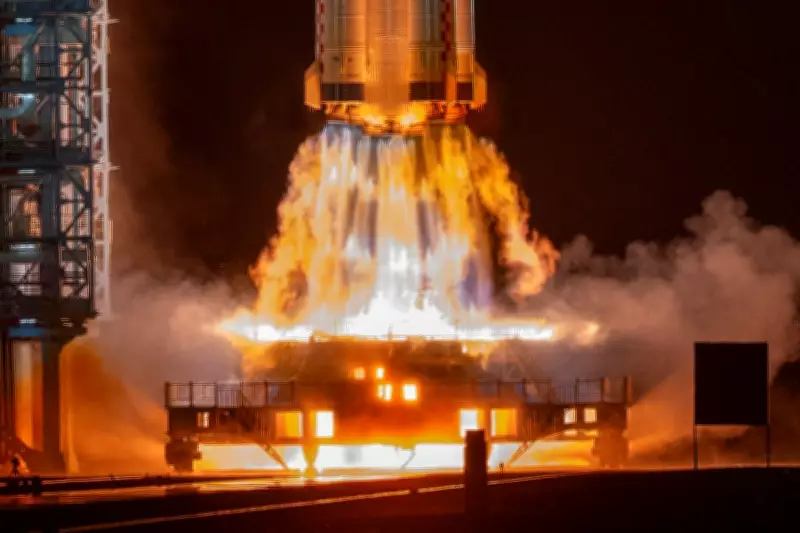
China successfully launched the Shenzhou-23 manned spacecraft on Sunday, May 24, 2026, from the Jiuquan Satellite Launch Center in northwestern China. The mission carries three astronauts, with one of them set to remain aboard the Chinese space station for an entire year, a significant milestone in the country's space program.
Mission Details
The Shenzhou-23 spacecraft lifted off as scheduled, marking another step in China's ambitious space exploration plans. The three-person crew will conduct various experiments and maintenance tasks during their mission. The yearlong stay for one astronaut represents a leap in endurance and operational capability for China's human spaceflight efforts.
Significance of the Yearlong Stay
This extended duration mission aims to test the long-term habitation capabilities of the Chinese space station, known as Tiangong. It will provide valuable data on the effects of prolonged spaceflight on the human body and mind, as well as the reliability of life support systems. The mission aligns with China's goal of maintaining a permanent human presence in space.

Launch and Crew
The launch occurred at the Jiuquan Satellite Launch Center, a key facility for China's manned missions. The crew includes experienced astronauts who have undergone rigorous training for this complex mission. The specific identities of the astronauts and their roles have been released by Chinese space authorities.
This launch comes amid growing international interest in space exploration, with China emerging as a major player alongside the United States and Russia. The Shenzhou-23 mission underscores China's commitment to advancing its space capabilities and scientific research.