Opinion: Taking a Foul for FIFA
Margot Young: Expo 86 and the 2010 Winter Olympics are well-documented as having displaced and disrupted many of Vancouver’s most vulnerable citizens. The city is saying that won’t happen during the World Cup but assurances ring hollow.
Vancouver is gearing up for the World Cup. May 13 saw a special bylaw kick in for this purpose. Building codes for temporary event structures are relaxed, bars can be open longer, and celebrants can be noisier than typically allowed. Traffic is rerouted; “beautification” of the city is underway. Those with financial means and leisure time are promised great soccer and parties, all FIFA-branded.
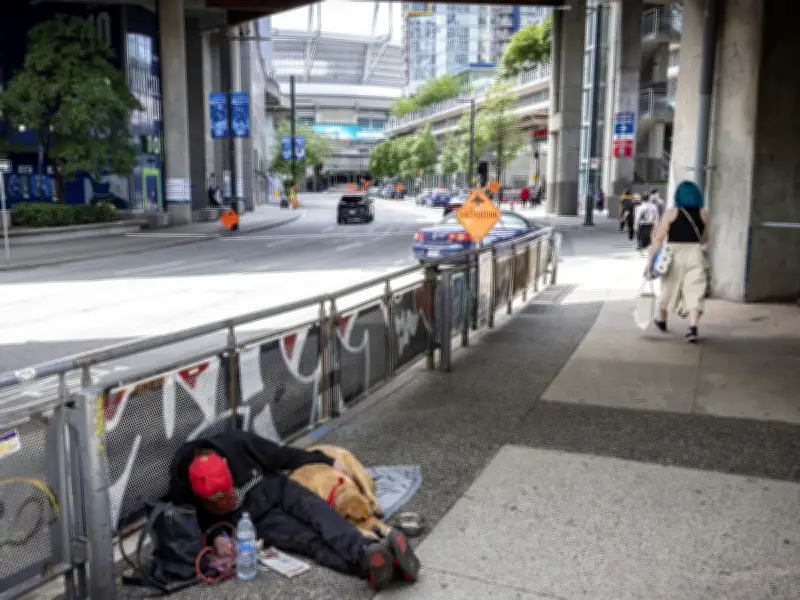
Let’s think for a moment about those who are homeless, who live on the streets in and close to the Cup event zones. What will be the impact on them when FIFA rolls into town? These large global events have bad track records — in Vancouver, and pretty much everywhere else. Expo 86 and the 2010 Winter Olympics displaced and disrupted the lives of many of Vancouver’s most vulnerable citizens. The city is saying that won’t happen this time but assurances ring hollow.

First, the city’s Cup bylaw does allow temporary nighttime sheltering on designated public lands. This is no grand gesture — the B.C. courts had to tell cities like Vancouver that such tolerance is constitutionally mandated. And it remains to be seen where such constitutionally protected sheltering will be respected during the games. Existing park board bylaws substantially limit public lands open for shelter, raising issues of how observant in practice the city is with the constitutional rights of the homeless.
We need guarantees that this right will be meaningfully accessible for those who need it during the Cup games — that is, that public lands designated for overnight shelter will be adequate, close to services and to homeless populations. This likely requires easing the restrictions that the park bylaw imposes. The city is silent on this.
As well, the bylaw explicitly bans daytime sheltering. Such a ban is currently under challenge at the B.C. Supreme Court. There is a good chance that it too will be found unconstitutional, given the lack of daytime shelter services relative to the growing number of homeless people. The court decision will come after FIFA has left town. But the prohibition on daytime shelter pairs with a ban in the streets and a traffic bylaw on placing chattels on the sidewalk. Strictly enforced, this could mean that the belongings of those forced to inhabit our streets can’t be stored or rested on public space.
Displacement and conflict are inevitable if enforcement of this bylaw provision is, as is predictable, stepped up for FIFA visuals. At risk are the day-to-day survival strategies of our most marginalized and vulnerable citizens. The city promises five daytime respite sites on game days but nothing on other days when Cup rules are nonetheless in effect. Every time the city acts it is bound by human rights — statutory and constitutional obligations. The final Vancouver FIFA human rights plan was released May 25. The plan promises trauma-based and human rights education for the police — something they should already routinely have.