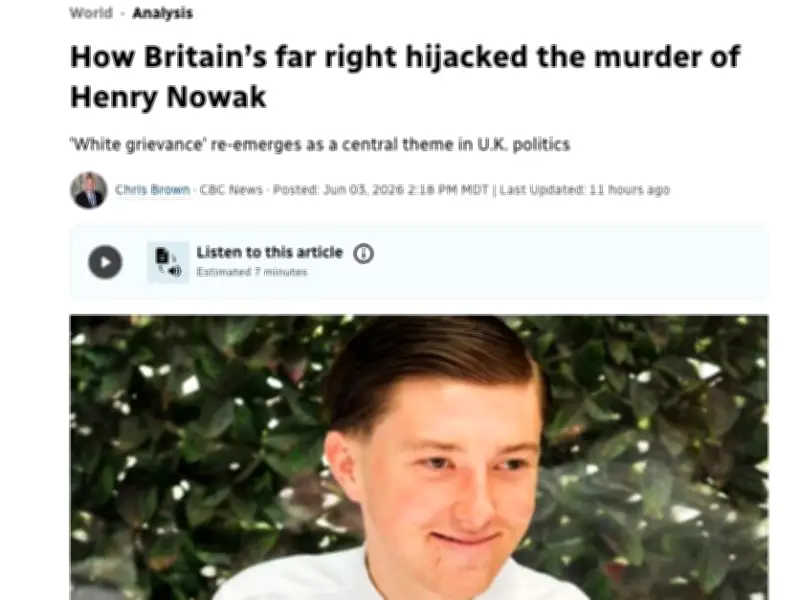
The murder of British university student Henry Nowak is a tragedy marked by extreme injustice, racial tensions, and the consequences of a society consumed by a particular brand of politics. Yet, CBC foreign correspondent Chris Brown, in his analysis titled 'How Britain’s far right hijacked the murder of Henry Nowak,' chose to ignore these critical elements, instead offering coverage that borders on propaganda.
Background of the Case
In the final moments of his life, 18-year-old Nowak was arrested by Hampshire police after being stabbed five times. His murderer, Vickrum Digwa, and his family conspired to cover up the killing, falsely accusing Nowak of racial abuse. Police initially believed this story, handcuffing Nowak and dismissing his pleas for help with the words, 'I don’t think you have, mate,' as shown in bodycam footage. The confrontation may have stemmed from Nowak filming Digwa, a Sikh, carrying a large ceremonial knife.
Police Failures and Racial Politics
UK police operate under national anti-racism guidelines that discourage 'colour blind' approaches, aiming for 'equality of policing outcomes.' This has created a climate where officers fear accusations of racism more than making fatal errors. One officer told the Telegraph, 'Operationally, there are clear differences in scrutiny depending on ethnicity.' A survey revealed that one in seven Hampshire police officers felt 'controlled and pressured' after mandatory diversity training.

Digwa was sentenced to life in prison with parole eligibility after 21 years, a term challenged as too lenient. While a pathologist testified that nothing could have saved Nowak, a national inquest will determine if police actions contributed to his death.
CBC's Biased Reporting
Instead of exploring these issues, Brown focused on protests following the bodycam release, using them to dismiss legitimate concerns about police conduct. His 'analysis' is thinly veiled opinion writing, lacking the objectivity expected of a public broadcaster. The CBC's coverage, both in print and broadcast, has distorted the story, ignoring the racial dynamics that skewed the police response.
This case highlights the dangers of politicized policing and media narratives that prioritize ideology over truth. The CBC's assault on reality does a disservice to Nowak's memory and the public's right to accurate information.