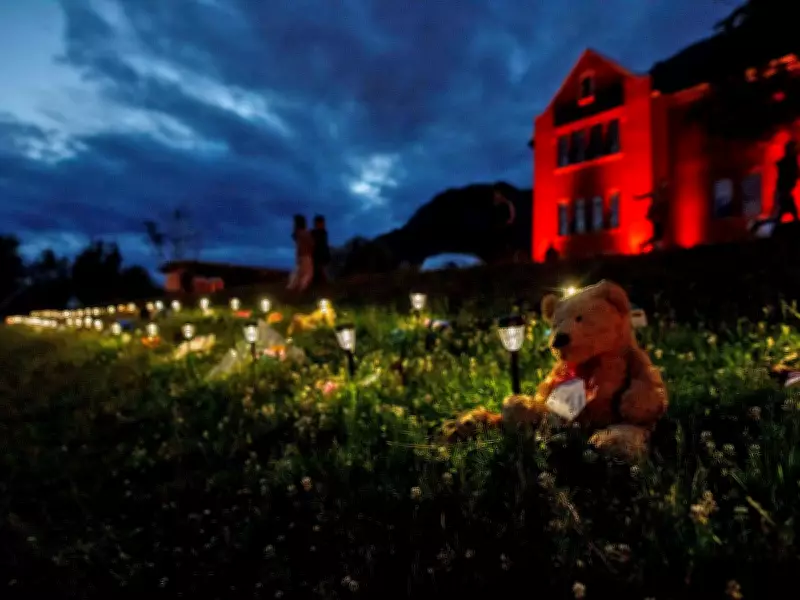
It has been five years since the Tk'emlups te Secwepemc First Nation announced it had discovered hundreds of unmarked graves at the former Kamloops Indian Residential School in British Columbia using ground-penetrating radar (GPR). The announcement sent shockwaves across Canada and drew global attention to the residential school controversy. Then Prime Minister Justin Trudeau ordered flags at federal buildings flown at half-mast for over five months, the longest such period in Canadian history. However, in the years since, the First Nation has walked back its initial claims. Here is what we know about Canada's graves controversy.
Original Allegations About Graves in Kamloops
On May 27, 2021, Chief Rosanne Casimir of the Tk'emlups te Secwepemc First Nation announced the discovery of the "remains of 215 children" after examining land at the former Kamloops Indian Residential School, which operated from 1890 to 1978. Casimir called it an "unthinkable loss that was spoken about but never documented" and stated that some victims were as young as three years old. The statement read: "This past weekend, with the help of a ground penetrating radar specialist, the stark truth of the preliminary findings came to light — the confirmation of the remains of 215 children who were students of the Kamloops Indian Residential School."
The next day, The New York Times published a story headlined "'Horrible History': Mass Grave of Indigenous Children Reported in Canada," although Casimir's original statement did not mention a mass grave. Five years later, many questions remain, and the Times story has not been corrected.

Changing Claims and Lack of Evidence
Sarah Beaulieu, an anthropology instructor at the University of the Fraser Valley who conducted the original GPR survey, cautioned in July 2021 that more research was needed and that the number of potential gravesites had dropped to 200. "We need to pull back a little bit and say that they are 'probable burials,' they are 'targets of interest,' for sure," Beaulieu said. She noted the sites "have multiple signatures that present like burials" but emphasized the need for excavations to verify the claims.
The First Nation's messaging has shifted over time. In 2024, on the third anniversary, the alleged graves were referred to as "anomalies" in the Tk'emlups te Secwepemc's Day of Reflection statement. The chief also called them "unmarked burials." In February 2026, a statement from the Office of the Chief described "our ongoing investigation into potential burials" at the former residential school, without mentioning children's bodies.
To date, no confirmed burial sites have been found, and no excavations have been conducted to verify the initial claims. The controversy continues to spark debate about the use of GPR and the handling of historical allegations.