The vistas on the West Mesa are stunning, worthy of a John Ford-lensed western epic about revenge and redemption. This elevated land mass in New Mexico sits west of the fabled Rio Grande, just touching the outskirts of Albuquerque, and is part of the Petroglyph National Monument. Cutting the geography in half is what remains of the storied Route 66. It is breathtaking, lonesome, and macabre.
Discovery of the Body Dump
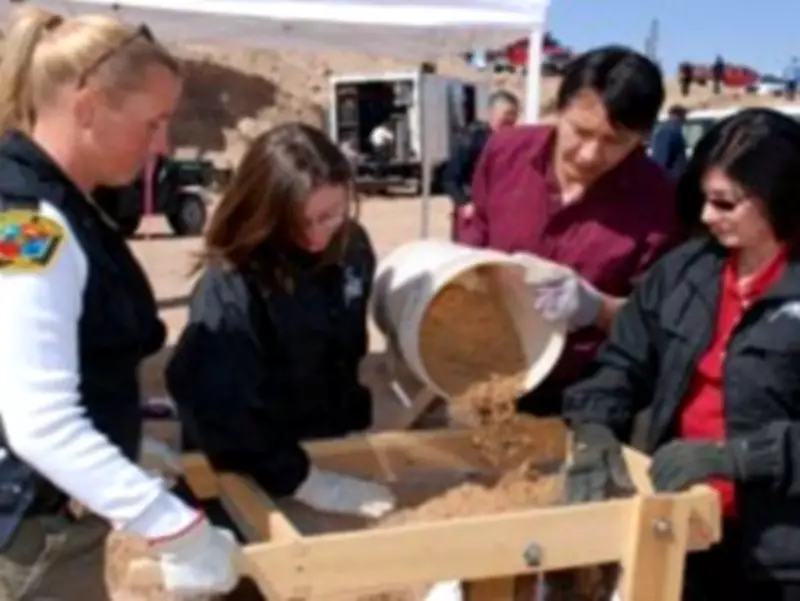
It was a woman walking her dog on February 2, 2009, who discovered what she thought was a human bone. Naturally, she called the police, leading to a sweeping investigation. What officers found was a body dump containing the remains of 11 women and girls. One of the women was pregnant. “They didn’t deserve what they got. It’s awful what happened to them…. They all had families that care for them,” said Myra Salazar, mother of victim Evelyn Salazar, to CBS News.
The victims were between 15 and 32 years old. Most were Hispanic and struggled with drugs, getting their fixes through sex work. The youngest was Syllania Edwards, 15, from Oklahoma. Detectives believe the slayings occurred between 2001 and 2005. While they believe the women and girls were victims of a serial killer, it was also concluded that the murders had ties to sex trafficking.

The Bone Collector
They called the killer “The Bone Collector.” According to police, the sex trafficking ring operated out of Texas, providing prostitutes for regularly scheduled events in the U.S. Southwest. State fairs, sporting events, and conventions were popular with the pimps. Four years had passed from the time of the final known victim’s burial in 2005. Albuquerque was booming, and clues were lost even before the gruesome graveyard was discovered. Flooding washed away forensic evidence.
“You can’t have a colder cold case. In this case, there was almost nothing but bones,” said criminologist Dirk Gibson. “Albuquerqueans don’t relate to the victims. They think they’re just a bunch of hookers and drug addicts…. Investigating a crime where the police think that the victim had it coming – there’s just no incentive for that.” The nature of the victims and their secretive lifestyles made the investigation a hard slog. Some community members claimed racism and a bias against sex workers made police sluggish.
Persons of Interest
The investigation went cold, although there have been periodic updates and appeals. “We still have persons of interest we are looking into, and we just don’t want it to be out there where we are losing tips because people assume we’ve got this number one suspect, we’re not there yet,” Albuquerque Police homicide detective Ida Lopez told KOAT.com on the 17th anniversary. Retired homicide investigator Liz Thomson agreed: “What it doesn’t have is a lot of physical evidence. These women’s remains were bones. There was no clothing. There was no jewelry. There wasn’t any physical evidence at that time.” She added: “It’s extremely gut-wrenching, heart-wrenching that so many families don’t have answers, including that there are still women that were on the list of missing women who haven’t been found, and that’s extremely important that there may be additional burial sites.”
Police say there are still eight women who vanished between 2003 and 2006. Their circumstances are eerily similar to the West Mesa victims. Law enforcement determined early in the investigation that the bodies were all dumped by the same person or persons. A serial killer was almost certainly at play, but no one has officially been named as a suspect.

There was a pimp named Fred Reynolds who knew one of the missing women. Local media said he kept a collection of photos of missing sex workers, but he isn’t talking: He died a month before the grisly find. Pressman Lorenzo Montoya was also eyed. He lived just five kilometers from the body dump site, and there were trails from his house. As an added bonus, Montoya had arrests for brutal attacks on sex workers, and his co-workers claimed he often discussed murdering women and planting them on the West Mesa. In December 2006, Montoya strangled sex worker Shericka Hall at her trailer. Her boyfriend shot and killed him as he tried to put the dead woman’s body in the trunk of his car. Detectives suspected it wasn’t the first time Montoya killed. Police found a video in his house of the killer having sex with a woman detectives believed was dead.
The search went as far as Joplin, Missouri, where New Mexico investigators searched properties belonging to businessman Ron Erwin. He was cleared. Joseph Blean also hit police radar. Known as the “Mid-School Rapist,” Blean targeted girls 13 to 15 years old in their homes in the 1980s. Blean was also the main man in the murder of a local sex worker. Police discovered women’s underwear and jewelry in his home (not belonging to his shocked wife). Blean told a fellow jailbird that he had hired some of the West Mesa victims to bring home for sex. He called them “trashy.” He is not going anywhere after being jailed for 36 years in 2015 for the rapes.
There was one more intriguing tip: An El Salvadoran truck driver who was once a member of his country’s special forces. His last name was Cota, and he had been linked to sex crimes in El Paso and Albuquerque. There have been no arrests, and the investigation remains open. A $100,000 reward is offered for information leading to the arrest and conviction of those responsible for the murders.