With a weak and possibly shrinking economy, coupled with growing trade uncertainty with the United States, it is a less than ideal time for a Canadian national unity crisis. Unfortunately, we seem to be rushing headlong into one.
It is not our first, of course, but what is unprecedented about our latest unity stress test is what is happening in western Canada. For the first time, Albertans will be casting ballots on their future in a fall referendum that could open the door to a subsequent binding vote on leaving Confederation.
While all of this is less than ideal, hopefully it can serve as a wake-up call. The underlying issues and frustrations in Alberta are not new, but this moment creates an opportunity to recognize just what it is we stand to lose.

Economic Impact of Alberta's Departure
There is a separatist argument that ultimately it is Canada that needs Alberta. The counterargument from the federalist side would be that Alberta needs Canada. The path forward might just involve acknowledging that both perspectives are correct.
And, indeed, there appears to be a growing recognition that losing Alberta represents a true lose-lose situation. Let us hope that from this common ground can emerge a path to diffuse these frustrations and finally build on the strengths of this partnership.
A new Postmedia-Leger poll finds that Canadians largely view Alberta’s departure from the federation as more economically damaging than Quebec’s potential exit. One-third of respondents said that Alberta’s departure would have a greater negative impact on Canada’s economy, compared to just eight per cent who said the same of Quebec.
It is a straightforward observation, in many ways. While Quebec is obviously larger, although Alberta’s population is growing much more rapidly, Alberta is much more of an economic engine for the country, representing a disproportionately large share of Canada’s economic output.
Addressing Western Discontent
The poll also reflects a broader acknowledgement of the need to address the discontent in Alberta. More Canadians believe that Ottawa does a better job reflecting Quebec’s interests than Alberta’s interests. And a whopping 66 per cent of Canadians say they support the agreement between Alberta and the feds to build a new pipeline and expand the province’s oil and gas sector.
That value gives Alberta some leverage, but it is not a one-way street. Just as Alberta’s exit would be negative for Canada, Canada’s absence would create negatives for Alberta.
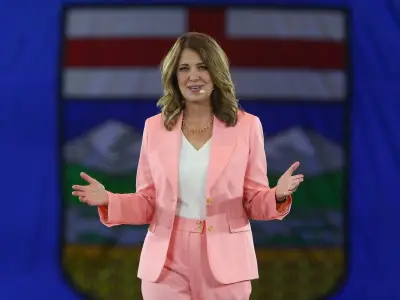
It was actually Alberta’s premier who laid this all out in rather stark terms earlier this week. When asked about a pending government report offering a cost/benefit analysis of independence, Danielle Smith noted it is already quite apparent that separation would mean significant costs for Alberta.
Alberta already controls its natural resources and the revenues that generates, which is not always the case for subnational governments. But as a subnational government, Alberta is spared the expense of the duties and responsibilities of a national government.