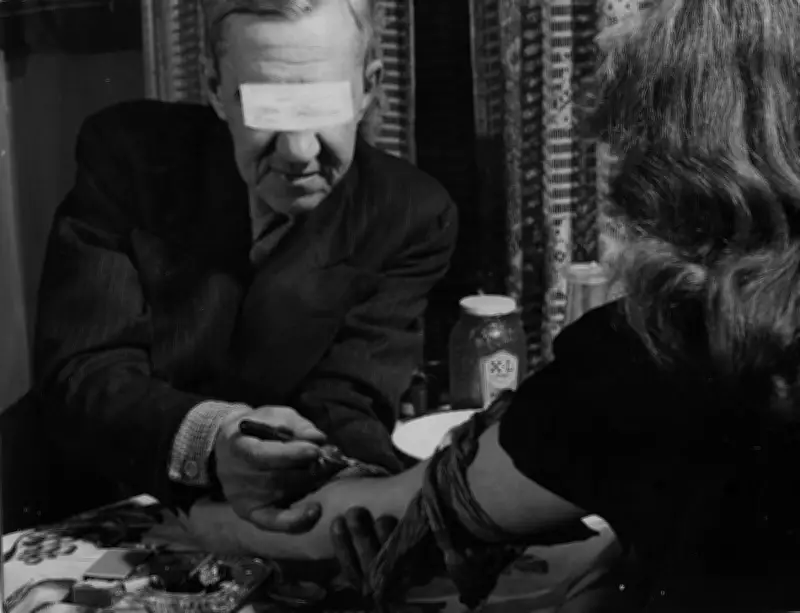
Jack Sieman may not have been as notorious as Al Capone, but in 1929 and 1930, the Canadian drug peddler dominated front-page news in Vancouver and San Francisco for his criminal activities.
Arrest and Escape Attempt
Sieman was apprehended in San Francisco on April 1, 1929, after undercover agents purchased $50,000 worth of cocaine and morphine from him and his associates, Phil Cohen and Mario Balisteri. According to the April 2, 1929, San Francisco Bulletin, a federal officer drew a revolver and covered Sieman just as he reached for his own gun in a shoulder holster. Sieman was released on $10,000 bail, but when Balisteri received a 12-year sentence, Sieman fled across the border to Canada.
The chief of the San Francisco narcotics bureau alleged that Sieman was connected to the notorious New York gangster Arnold Rothstein, who had been murdered a few months earlier. A story in the May 22, 1929, San Francisco Examiner claimed that the narcotics squad believed Sieman had operated on the West Coast for at least 12 years, doing a business of a million dollars annually.

Rivalry and Extradition
Sieman was a rival of another major drug peddler, "Black Tony" Parmagini. Police believed Black Tony had hijacked $30,000 worth of drugs from Sieman, prompting the Rothstein gang to send Phil Cohen to San Francisco as Sieman's bodyguard. Sieman was arrested in Vancouver on January 20, 1930, and fought extradition to the United States. On April 29, 1930, he attempted to escape from the Vancouver city jail using a smuggled saw and with a 22-year-old accomplice, aiming to cut through four window bars. However, the 42-year-old Sieman was injured after jumping two storeys, captured, and taken to Oakalla Prison. His extradition fight was rejected on May 17, 1930, and he was handed over to U.S. authorities at the border.
Sentencing and Later Years
Sieman arrived in San Francisco under heavy guard on May 19, 1930. The San Francisco Call Bulletin reported that extra precautions were taken due to fears of a rescue attempt. Four days later, Sieman entered a surprise guilty plea, demanding immediate sentencing by a judge unfamiliar with his case. U.S. Attorney George Hatfield objected, stating that Sieman had pleaded guilty hoping for a light sentence. The judge agreed, postponed sentencing, and on June 30, 1930, Sieman received a 10-year prison term, which he served at Alcatraz.
After his release, Sieman returned to Vancouver and resumed his illegal activities. On February 12, 1944, the RCMP and American federal agents claimed to have dismantled an international drug-smuggling ring operating in Vancouver, California, and Mexico, with several arrests including Sieman. The RCMP seized $10,400 from his safety deposit box and an additional $2,500 found on him at the time of arrest.