For those who travel to eat, meals away from home are precious. A marquee meal can be the most memorable highlight of a trip, and with limited opportunities, there is no room for mediocre food. Even harder to stomach is expensive, inauthentic, or boring cuisine. In other words, a tourist trap restaurant.
What is a tourist trap restaurant?
According to a study by PhotoAiD, the top three criteria that make a place a tourist trap are above-average pricing, amenities tailored for tourists, and a lack of cultural authenticity. These traits are not always immediately apparent, so we asked a panel of culinary experts and travel pros for their insights. Taryn Scher of TK PR considers a tourist trap "a spot that has a lot of buzz but doesn't really have the flavors to back it up." Sadly, this can include famous institutions. "There are long-standing restaurants that exist on buzz, simply for the sake of 'You have to go to X if you're visiting Z.' Some of these are even places you might want to say you visited, even if the food is second-rate," she said. Based on 15 years of representing destinations like Greenville, South Carolina, and The World Equestrian Center in Ocala, Florida, she has found that "these aren't really the place for serious food lovers who travel for food."
Executive pastry chef Claudia Martinez and "Top Chef" contestant Hector Santiago, both James Beard semifinalists, believe intent defines a tourist trap. "To me, it's a place that makes what they assume a traveler would want ... like pizza how they think an American would want it rather than making a delicious version of pizza that has their spin on it," Santiago explained. As a Puerto Rican native, he finds this particularly grating because "I want people to try the authentic cuisine. To me, one of the best parts of traveling is immersing yourself somewhere to live like a local."

Martinez dismisses any restaurant that is "not locally owned and doesn't embody the city's culinary talents as a whole, but rather, focuses on turning tables for profits and promoting sub-par food." This translates into higher prices with lower quality, with a focus on the biggest payoff for the owners instead of the best experience for diners. Nearly 70% of travelers surveyed by PhotoAiD said a visit to a tourist trap diminished their overall enjoyment of a trip, which is why you should keep these six red flags in mind.
1. A Whole Lot of 'Come Hither'
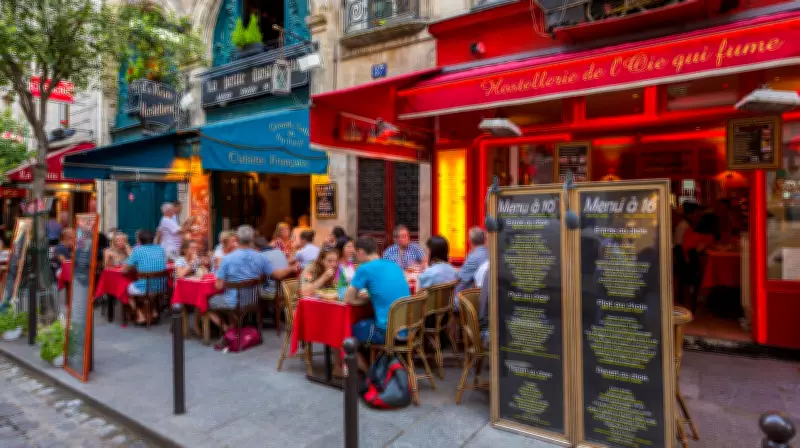
All six experts HuffPost spoke to listed this as their number one warning: beware a loud, overeager welcome, starting with decor. Scher cautions that "theme-y spots that are overly kitschy, or any beach bar that's covered in $1 bills are probably tourist traps. And most are generally pretty loud." Okan Kizilbayir, chef de cuisine at The Ritz-Carlton, Amelia Island, agrees. He says of his home country, "In Turkey, instead of shiny and loud entrances, there are hosts with a menu in their hand and they'll constantly talk to you to get you in the restaurant and tell you that they'll give you a big discount." After traveling through 30 countries in seven years doing culinary research, Jared Hucks, chef-owner of The Alden in Atlanta, agrees that employees blatantly trying to lure travelers is the brightest red flag. "I avoid any places on the 'beaten path' with menus with multiple languages posted in front of the restaurant," he said. Santiago bluntly added, "I walk the other way when I see someone standing outside soliciting travelers as they pass out menus in 100 different languages." Worse yet is if said multilingual menu is plastic-coated and has pictures of the food, according to Italian native Piero Premoli, executive chef and partner of Pricci in Atlanta. Whenever he returns to his homeland for culinary deep dives, he steers clear of those and checkered tablecloths.

2. Location, Location
It is hard to resist the convenience of proximity, especially after walking all day. But being close to major attractions usually comes with big crowds and high rents that "hyperlocal spots wouldn't be able to afford unless they're feeding tens of thousands of visitors a week," Scher said. Martinez points out that "larger-scale, over 200-seat operations, usually in downtowns" are indicative of corporate ownership, with the marketing and budget to design a tourist trap. "I want to make sure my money is being spent on people who work hard to put out their local cuisine, not mass-market corporations or tourist traps that purchase food that's already made," she said, which is why she actively seeks restaurants off the main roads.
3. Size Matters
Another example of how bigger is not always better is menu size. One of Kizilbayir's peeves is "too many items on the menu! And too many different styles or regions." If a restaurant tries to be everything to everyone, it is unlikely to be cooking seasonally or to the destination. Santiago said, "I also stay away from places that overly complicate their menus by throwing everything on a plate. You can't get everything from an area on one plate!" A giant menu also increases the likelihood of being uninventive or "generic, Anywhere, USA," as Scher put it, with basic items like burgers. It might contain foods that are American despite having other associations, such as chicken Parm, fettucine alfredo, and spaghetti and meatballs, as Premoli points out. Within that large menu, "watch out for excessive fried appetizers," Premoli said, coming back to premade food. A menu rich with deep-fried selections means the restaurant has prioritized frozen, cheap, quick, and easy-to-prepare food. "Also watch for repetitive pairings and big frozen food trucks parked there in the morning," he adds.
4. Predictable Desserts and Drinks
Everyone has a favorite dessert standby, but Martinez knows how to recognize tourist traps by their after-meal sweets. "Classic cheesecake, molten lava cake, key lime pie ... these aren't usually made in-house," she shared. Ice cream is also usually brought in by a restaurant supplier unless otherwise stated. Too-perfect sliced cakes and pies are signs of mass production. "If there are desserts on display or on the menu with pictures, or outside signage of the desserts, especially in a restaurant that seats over 200 people, it usually means they're supplied by commercial bakers," she revealed. If desserts lack description and are decorated the same way, with whipped cream star piping, mint garnish, strawberries sliced like a rose, and powdered sugar on everything, it is unlikely they have a pastry chef on staff. Scher gauges by available drinks. "Look at the wine list, the cocktails, beers ... that'll tell you a lot about a restaurant! Ask yourself, How Target wine aisle is the list?" Instead, look for local beers to indicate regional tie-ins and inventive cocktails to show investment in craftsmanship. If there is nothing more than major beer brands and "typical appletinis and cosmos," you might want to rethink using up a vacation meal there.
5. Spectacle and Superlatives
On the other side of the humdrum spectrum are spots that are irresistibly photogenic. Anything too sparkly is suspect, according to Santiago and Kizilbayir, who quickly flags Insta-spots when "people have a cue to take pictures and the restaurant is showcasing more merchandise than what they should sell, which is good food." Additionally, he spears what he calls "stupid tableside shows," not to be confused with genteel tableside presentation. He defines these shows as food served with "lowbrow or loutish style to get attention." "They don't care about the food; they just want people to take pictures or videos and post them on social media for attention," and to make money off this new form of tourist trap. This misrepresentation and manufactured hype is why Martinez is wary of "showy or Instagram-forward restaurants" when she travels, as well as anyone using overly effusive praise in their social coverage. Key turnoffs include the words "the best" or "amazing," while Scher says she is "hesitant to believe any restaurant's website or marketing that claims they are No. 1 for anything in their city but don't say where they earned that nod." "Anyone can claim to have the best anything if they want to, so make sure you look into that achievement before just believing it," she said.
6. Your Would-Be Fellow Diners
If a menu feels too familiar, you might be in a tourist trap. The same goes for the clientele. Kizilbayir keeps his distance from restaurants that specialize in serving group tours. "It's the circle of life: Tourists come to the city. They show the historic places, museums, gardens. They start to get hungry. Then, the tour guide takes a busload of tourists to a place that looks attractive," he said. But "you cannot deliver good quality food for that many people at the same time, so as a restaurateur, you have to cut corners. You make the food or drinks look 'bombastic.' You bring desserts with sparkly candles, play loud 'popular music,' have servers sing in weird outfits or hats." "Tourists leave these places with bad food in their stomachs, but the tour guide gets a cut of the profits. It's an easy turn," he admitted. During his travels, Hucks seeks out restaurants devoid of tourists like himself. "If you're in a country or region that speaks a different language than your own, avoid places where you hear a lot of non-native chatter," he said. Santiago also avoids restaurants with too many other tourists. "When I'm eating at a tapas restaurant in Spain, I want to hear the table next to me speaking Spanish. I look for where the locals are." He confessed: "As a restaurant owner, I have a love-hate relationship with things like Google reviews, but I do find they are helpful for finding where the locals go. Are the reviews written in the local language? If I'm going to Portugal, reviews that are all in English are a red flag. I look at what people are wearing in pictures. In Europe, you dress up to go out to dinner. Seeing pictures of people in shorts and T-shirts at a 'fancy' restaurant in Madrid lets me know it's not where the locals are going." As Premoli neatly sums up, "The main giveaway for a restaurant's authenticity is the local clientele!"