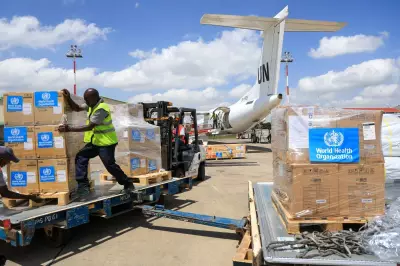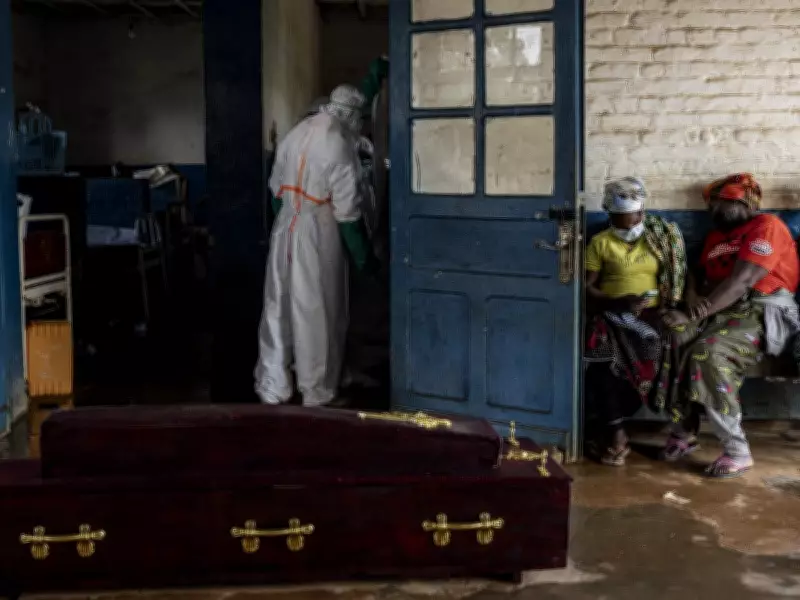
The Democratic Republic of Congo has suspended flights to the eastern city of Bunia as the Ebola outbreak spreads across three provinces, overwhelming contact-tracing efforts and prompting regional health ministers to warn of escalating cross-border risks.
Alarming Surveillance Gaps
Authorities reported 91 confirmed Ebola infections, 867 suspected cases, and 204 probable deaths as of Friday. Health workers have managed to trace only a fifth of the 1,745 identified contacts under monitoring, a gap the Africa Centre for Disease Control and Prevention described as alarming.
Travel Restrictions Imposed
Congo’s transport ministry halted commercial, private, and special flights to and from Bunia, one of the outbreak’s epicentres in Ituri province near the Ugandan border. Humanitarian and medical flights may still receive special authorization, the ministry said Saturday.

The measures underscore how rapidly the Bundibugyo strain of Ebola is spreading through eastern Congo and into neighbouring countries, straining already fragile health systems. There is no approved vaccine or antibody treatment for this rare virus type, forcing authorities to rely heavily on basic public health measures.
International Response
The United States expanded its Ebola response Saturday, announcing enhanced airport screening for travellers from Congo, Uganda, and South Sudan, along with emergency funding, medical supply shipments, and deployment of disaster response teams.
Jean Kaseya, director-general of the Africa Centres for Disease Control and Prevention, said the outbreak is being fought without one of the most important tools: vaccines. It is like you are a soldier going to fight without ammunition, he said in an interview. We have to rely on public health measures.
Regional Coordination
Regional concern intensified Saturday after health ministers from Congo, Uganda, and South Sudan met with officials from Africa CDC and the World Health Organization in Kampala to coordinate a cross-border response. In a joint communique, the countries warned that porous borders, mining and trade corridors, humanitarian crises, and population displacement were increasing the risk of wider transmission across East and Central Africa.
The outbreak, now the second largest after the 2014-2016 West Africa epidemic, is caused by the rare Bundibugyo strain. Hopes that existing vaccine options could provide partial protection have faded in recent weeks, Kaseya added.