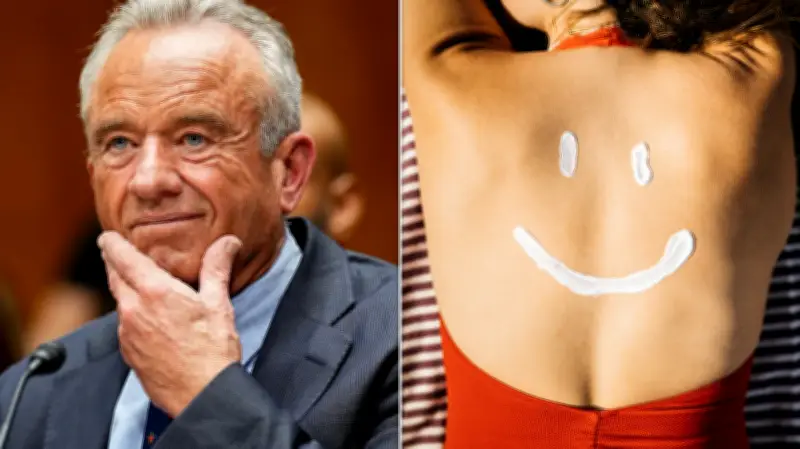
The Food and Drug Administration (FDA) has expanded its list of approved sunscreen filters for the first time in more than 20 years. On Tuesday, the FDA added bemotrizinol, limited to 6%, to the list of permitted active ingredients for over-the-counter sunscreens.
U.S. Department of Health and Human Services Secretary Robert F. Kennedy Jr. strongly supports the ingredient, stating in the FDA press release that "bemotrizinol has been used safely in Europe for decades, and FDA's action will increase competition and consumer confidence in sunscreen products." Kennedy has backed many questionable health causes over the years, including incorrect statements about the link between Tylenol and autism, and a recent suggestion to roll back restrictions on tanning beds for teens. So naturally, this might make one wonder — is bemotrizinol safe?
Bemotrizinol (also known as BEMT and bis-ethylhexyloxyphenol methoxyphenyl triazine) is considered Generally Recognized As Safe and Effective (GRASE) by the FDA and is recommended for use on adults and children ages 6 months and older.

Expert Insights on Bemotrizinol
Following the FDA news, consumers are eager to get their hands on sunscreen with bemotrizinol. This UV filter will soon be available to U.S. consumers, improving sunscreen options.
"Bemotrizinol is an oil-soluble chemical filter which protects against both UVA and UVB rays," Dr. Amank Jambhekar, a melanoma surgical oncologist, told HuffPost. Dr. Lily Park, a Korean-American triple-board certified dermatologist, adds that bemotrizinol is photostable, meaning it doesn't break down easily in sunlight. As it's oil-soluble, it dissolves in oil rather than water, making it easy to spread across the skin. It also has low skin absorption and is suitable for people with sensitive skin.
Why Has It Taken So Long to Approve Bemotrizinol?
The process for the FDA to approve a new sunscreen ingredient has been historically slow. Sunscreens are regulated as over-the-counter drugs in the U.S., and the FDA requires robust safety and efficacy data before adding an ingredient to the monograph, including information on systemic absorption and long-term use, since sunscreens are applied repeatedly, often over large body surface areas, and are used by children and pregnant patients.
Bemotrizinol doesn't break down in the sun, unlike the previously approved non-mineral UVA filter, avobenzone, and will provide U.S. consumers with stronger broad-spectrum UVA protection. Currently, U.S. sunscreens block UVB rays but lack adequate shield against UVA rays, which penetrate deeply into the skin, are a primary contributor to skin cancer and may lead to premature aging. As skin cancer is the most commonly diagnosed cancer in the U.S., this is a landmark decision for consumer protection and sunscreen innovation.
The ingredient has been used in countries since 1999 known for their effective sunscreens, including Europe and Korea, and has amassed a safety track record abroad. The FDA now allows use of up to 6% bemotrizinol and considers it appropriate for adults and children 6 months and older. In many European and Asian countries, bemotrizinol is allowed up to 10%.
What This Means for Consumers
This is a long-awaited advancement in sun protection, and Park says American consumers should have access to newer broad-spectrum filters already used internationally. In Korea, Australia and Europe, patients have had access to modern sunscreen filters like bemotrizinol for decades. Park finds many of those formulations lighter and easier to wear and to reapply multiple times a day. She says this translates into better real-world sun protection, which is especially important for patients with melasma, hyperpigmentation, photoaging concerns or a history of skin cancer.

Jambhekar doesn't believe there are any cons to using bemotrizinol in sunscreen and says the ingredient is better tolerated than existing UV filters. She's hopeful bemotrizinol will improve everyday sunscreen use, and notes that sunscreen with a bemotrizinol layer is better under makeup and works best on all skin tones. But Park stresses that bemotrizinol alone isn't a hero ingredient. "Many Korean and European sunscreens combine bemotrizinol with several other modern filters that aren't approved in the U.S. The final sunscreen depends on the full formula, the other filters used, and whether people apply enough and reapply appropriately," she said.
When Will U.S. Consumers Be Able to Purchase It?
Following the FDA news, consumers are eager to get their hands on sunscreen with bemotrizinol. This UV filter will soon be available to U.S. consumers, improving sunscreen options. Parsol Shield has 18 months of exclusive marketing rights in the U.S. and is set to launch a product in June. "Not everyone has access to Asian and European brands, and this is a game changer for accessibility to next-level sunscreen, which is suitable for everyone," Jambhekar said.
With the Parsol Shield exclusive on bemotrizinol, consumers will likely have to wait 1 1/2 years to buy bemotrizinol sunscreen from other manufacturers. Since sunscreen is a drug product in the U.S., manufacturers who want to add bemotrizinol to their sunscreen must formulate, test, label, manufacture and distribute products that meet U.S. requirements.
"The earliest U.S.-compliant bemotrizinol-containing products may come first from companies already preparing for this shift, while broader availability may take longer," Park said. Olive Young, a Korean skincare store that recently launched a U.S.-based site, sells sunscreens with FDA-approved filters, but Jambhekar hopes the new FDA approval of bemotrizinol means the Korean retailer will be able to quickly add bemotrizinol-containing Korean sunscreens.
Looking for a good sunscreen in the meantime? These are dermatologists' favorites.