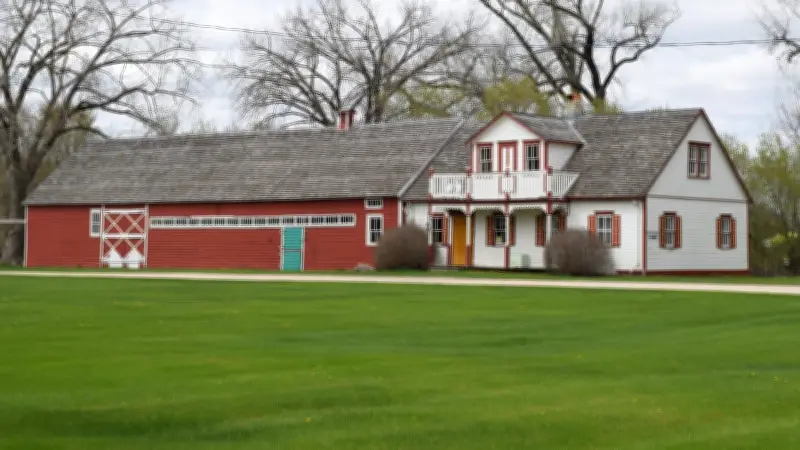
At their peak during the early years of Mennonite settlement in southern Manitoba, an estimated 2,000 housebarns stood across the region. Today, only a couple dozen are believed to remain. The Friesen Housebarn Interpretive Centre, pictured in Neubergthal, Man., on May 16, 2026, now serves as a beacon of preservation for this vanishing architectural heritage.
What Is a Housebarn?
A housebarn is a traditional structure that combines living quarters and a barn under one roof. This design was brought to Manitoba by Mennonite immigrants from Russia in the late 19th century. It allowed families to live close to their livestock, providing warmth in winter and efficient use of materials.
Decline of a Tradition
As farming practices modernized and families moved away from rural life, many housebarns were demolished or fell into disrepair. The few that remain are now cherished as historical landmarks. The Friesen Housebarn Interpretive Centre aims to educate visitors about this unique building style and the culture it represents.

Efforts are underway to document and protect the remaining structures. Local historians and preservationists are working to raise awareness and funding for restoration projects. The centre offers tours, exhibits, and educational programs to ensure that the legacy of the Mennonite housebarn endures for future generations.