The release of Beef Season 2 on Netflix has ignited widespread online discussion, from analyses of its gripping finale to interpretations of symbolic elements like ants, and reactions to its most shockingly revolting scenes. However, one aspect that deserves more attention is the profound Korean identity woven into the series.
Beyond being a twisted thriller exposing humanity's darkest tendencies and the pitfalls of late-stage capitalism, the show serves as a love letter to Korea and its culture. Told with appreciation, authenticity, and nuance, it reflects creator Lee Sung Jin's deep connection to his heritage. While Season 1 offered glimpses, Season 2 leans even more heavily into Korean roots.
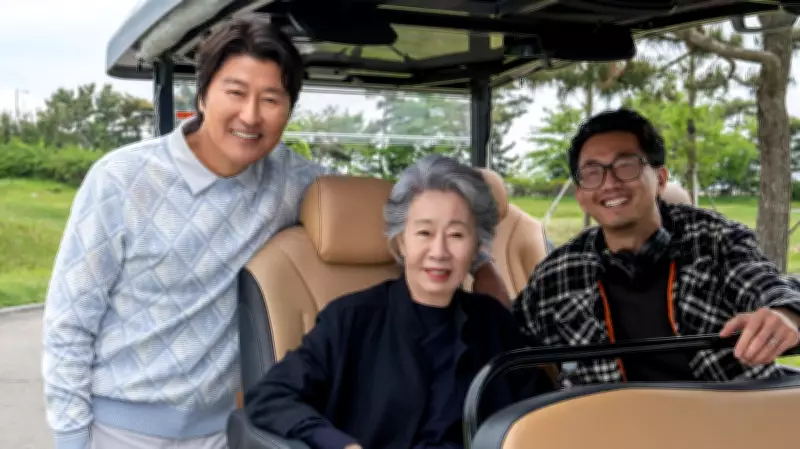
The series features extensive Korean-language dialogue and numerous references to K-beauty and K-culture, such as the Korean energy drink Bacchus, K-pop group BTS, and various skincare treatments. Actors of Korean descent comprise a significant portion of the cast, including Charles Melton, Matthew Kim, and Seoyeon Jang, alongside legendary Korean actors Youn Yuh-jung and Song Kang-ho. The season finale unfolds in Seoul, with scenes filmed at the headquarters of Amorepacific, South Korea's largest cosmetics company.

What Filming Beef Meant to Its Cast Members of Korean Descent
Charles Melton, who plays half-Korean character Austin and is himself half-Korean, described shooting the final episode in Seoul as an "incredible gift." He shared via email, "My mother is Korean, and I spent part of my childhood there. Seoul has always been part of me, but returning as an actor telling this story was something else entirely."
Despite the global rise of Korean popular culture, it remains rare for a Hollywood series to feature so many Korean cultural elements and prominent representation both behind and in front of the camera. For Matthew Kim, who plays tennis instructor Woosh, the show felt unique from the start. "It began in Episode 1, where everyone waits at the country club for Chairwoman Park to arrive," Kim told HuffPost. "They say, 'Annyeonghaseyo!' Seeing Americans greet in Korean is something you would never have seen 10 years ago." He added, "It's a huge honor to be on a show where Korean culture and Korean people are respected."
Other cast members echoed this sentiment. Melton noted, "Being part of a story that connects to my Korean heritage made me realize how much I had been waiting for a project like this." Seoyeon Jang, who plays personal assistant Eunice, revealed that working alongside other actors of Korean descent "felt like home" due to an unspoken connection rooted in shared heritage.
How Beef Opened New Possibilities for Its Creator and Cast
A series centering Korean identity and culture would have been unthinkable 15 or 20 years ago. Lee Sung Jin, who landed his first TV writing job in 2008 for It's Always Sunny in Philadelphia, recalled the lack of diversity in writers' rooms. "There just weren't any stories being told of anyone of color," he said. "As a writer of color, you try to assimilate and fit in, copying and mimicking because the last thing you want is to be yourself." He admitted it took nearly two decades to become comfortable sharing his heritage through his work. "Beef was the first time I could be 100% myself and put my Asian American experience into the show."
Growing up in London and speaking fluent English, Jang never considered working in Western television until her role in Beef. Previously focused on Korean films and K-dramas, she appeared in the 2025 American spy thriller Butterfly, but that was shot entirely in South Korea. "For me, the only option was Korea," she said. "This sense of a global stage was not something I had considered." Born and raised in Los Angeles, Kim moved to South Korea to pursue entertainment, debuting with co-ed K-pop group Kard. He noted the lack of Asian representation in Hollywood kept him from considering acting. "Watching TV as a child, the only Asians I saw were Lucy Liu, Jet Li, and Jackie Chan." Beef marks his acting debut, and he feels fortunate to land such a role. At the Season 2 premiere, he realized he might inspire future generations of Asian actors. "I wonder if I could be that for someone else," he said.

Hollywood's Appetite for Korean Culture and Asian Talent
The Hollywood landscape has shifted in recent years, partly due to global cultural trends. A 2024 University of Southern California study of top-grossing films from 2007 to 2023 showed the percentage of Asian speaking roles jumped from 3.4% to 18.4%. Asian men, once deemed unattractive by mainstream media, are now often portrayed as desirable, thanks to K-pop and K-dramas. Nancy Wang Yuen, an ethnic studies professor at Crafton Hills College, explained, "Beauty standards are changing. When I grew up, blond, blue-eyed was the only standard. Now, with K-pop and K-beauty, people appreciate the Asian face."
Social media and streaming platforms like Netflix have driven the globalization of entertainment. Currently, the biggest band (BTS), TV show (Squid Game), and movie (KPop Demon Hunters) are Korean or grounded in Korean culture. Stories from the Korean diaspora, such as Minari, Pachinko, and Beef, have won prestigious awards. Jang and Kim feel fortunate to enter Hollywood at a time when K-culture enjoys global popularity. Jang said, "BTS and Blackpink paved the way. We are all benefiting from a trickle-down effect." Kim added, "While I love the attention on Korean culture, it creates hope for other Asian ethnicities to have doors opened."
Where Do We Go From Here?
Despite progress, Yuen stressed that Hollywood still has a long way to go in Asian and AAPI representation. The USC study's increase in Asian roles largely stemmed from imported Asian films, and by 2024, speaking roles for Asian characters fell to 13.5%. Yuen noted, "Simu Liu posted that Hollywood still sees Asians as risks. Many Asian American actors struggle to get more than guest-star roles." She added, "There are more opportunities than in the past, but that's because we had none before."
Nevertheless, the growing number of Asian and AAPI creators and actors earning global recognition—such as Steven Yeun, Ali Wong, Lee Jung-jae, Michelle Yeoh, Ke Huy Quan, and Chloé Zhao—offers hope. Kim and Jang remain optimistic. Kim said, "Many doors have opened, and I hope more open for those doing the work." Jang added, "I see demand growing. I hope to pave the way for future generations, just as Youn Yuh-jung did for me. It's a shared responsibility—Lee Sung Jin, Charles Melton, Youn Yuh-jung, and many others are doing that."
Beef is streaming on Netflix.