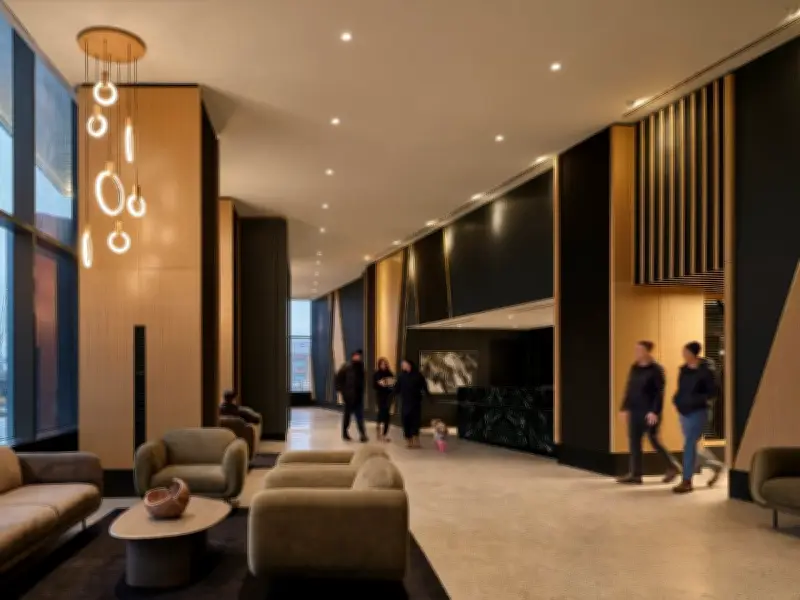
Once treated largely as pass-through spaces, condo lobbies are now being asked to do more than provide handsome first impressions. Marcella Au, senior associate and retail and interiors lead at BDP Quadrangle, the Toronto-based architecture firm behind projects such as CG Tower in Vaughan, Westbend Residences near High Park, and Gallery Towers in Markham, explains how lobby design is changing, why concierge desks still matter, and how developers and designers can create spaces that are both practical and eye-catching.
The Evolving Role of Condo Lobbies
According to Au, lobbies have become real community spaces. They are where children might go trick-or-treating, residents gather for meet-and-greets, or people wait for friends to chat. This helps residents feel connected to the building and to one another, rather than simply moving through a shared entrance. Beyond community, lobbies serve a logistics role: handling deliveries, move-ins, package management, and concierge coordination.
Balancing Multiple Functions
Au notes that much more planning is involved now. Older buildings that did not anticipate the growth of online shopping and delivery can face challenges depending on the size and layout of the lobby. A lobby still needs presence, a sense of place, and a sense of arrival. It must be aesthetically pleasing, but also timeless and durable enough to support heavy use.

When designing lobbies today, Au emphasizes that there is almost always a dedicated area for parcel lockers or package storage. This area needs to be close to the mail room for efficient deliveries, but it must also be designed carefully because parcel rooms and lockers are not always aesthetically pleasing.
Food Delivery and Pickup Solutions
Food delivery adds another layer of complexity. Some buildings have allowed delivery drivers to go directly to residents' floors, but many are moving away from that. Au observes a trend toward dedicated pickup nooks in or near the lobby, where residents can come down and collect their orders. This creates a grab-and-go model that still needs to feel integrated into the design.
Design Evolution in Suburban Master-Planned Communities
The growth of master-planned communities and downtown-like cores in suburban areas has changed how designers think about residential lobbies. In these settings, many residents may be moving from single-family homes into a shared building format. This shift places much more emphasis on the arrival experience. Au explains that the lobby is becoming a kind of third place: not quite home, not quite the city outside, but a shared space where residents can arrive, gather, and feel a sense of belonging.
Future-Proofing Lobby Design
When asked how to future-proof a lobby when technology and resident expectations keep changing, Au highlights the balance between embracing technology and maintaining human elements that make people feel at home. She notes that a period when some buildings tried using a virtual concierge on a screen did not work well. People still want in-person interaction. Au, who lives in a condo herself, enjoys seeing the same person at the concierge desk saying good morning or good night.
Ultimately, the lobby remains one of the hardest-working spaces in a building, requiring thoughtful design to accommodate both practical needs and the desire for community connection.