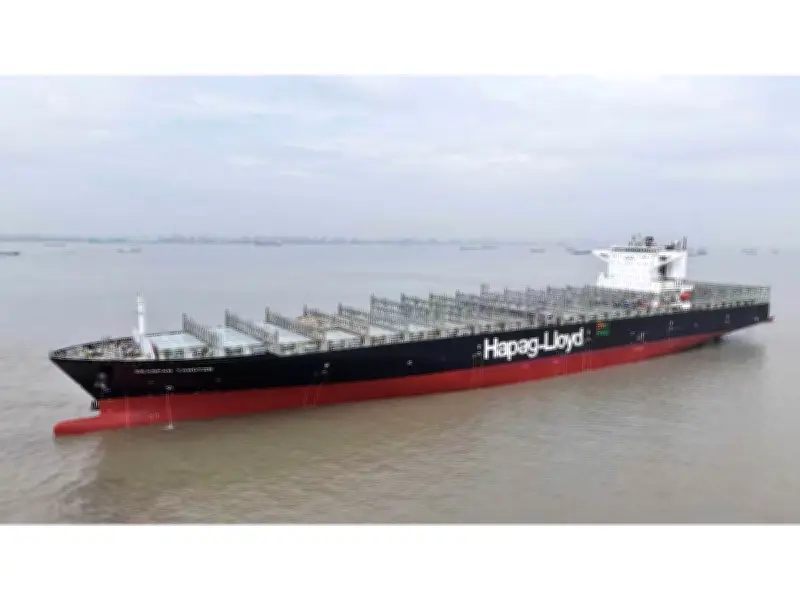
Seaspan Corporation and Hapag-Lloyd have announced the successful completion of the first methanol retrofit under their Project SAVER CleanBlue program. The converted vessel, Seaspan Yangtze, marks the beginning of a five-vessel conversion initiative aimed at reducing emissions in container shipping.
Technical Achievement and Environmental Impact
The retrofit of Seaspan Yangtze represents a significant technical milestone, demonstrating the feasibility of converting existing vessels to operate on low-carbon methanol. Each converted vessel is expected to reduce CO2e emissions by approximately 30,000 to 50,000 metric tonnes annually when using methanol, while also extending the vessel's lifespan and improving fuel flexibility. The remaining four vessels scheduled for retrofit are Seaspan Amazon, Seaspan Ganges, Seaspan Thames, and Seaspan Zambezi.
Commitment to Decarbonization
Bing Chen, Chairman, President, and CEO of Seaspan, emphasized the importance of retrofitting existing fleets: "Decarbonization is not just about building the fleet of tomorrow; it is also about unlocking the full potential of the fleet we have today. Retrofitting and upgrades on existing fleets play a practical, immediate, and economical role in accelerating shipping’s decarbonization journey." He noted that Project SAVER CleanBlue highlights Seaspan’s strong customer partnerships, deep technical expertise, and unique platform integrated with joint venture partners like WattSpan Maritime Technology.

Silke Lehmköster, Managing Director of Fleet at Hapag-Lloyd, added: "The successful conversion of the Seaspan Yangtze together with the planned retrofit of its four sister vessels is another important step on our ambitious path towards net-zero fleet operations by 2045. Together with Seaspan, we are demonstrating that retrofitting existing vessels for low-carbon methanol can be a practical way to reduce emissions in shipping."
Seaspan's Decarbonization Strategy
Seaspan has committed over $230 million USD across 86 vessels, executing more than 550 efficiency and retrofit projects under its SAVER (Seaspan Action for Vessel Energy Reduction) program and CleanBlue initiative. The company's integrated platform spans the entire vessel lifecycle, from engineering and retrofitting to operations, delivering scalable, turnkey solutions for transitioning to lower or zero-emission operations.
As of March 31, 2026, Seaspan's operating fleet consisted of 247 vessels, with a total capacity of approximately 2.5 million TEU on a fully delivered basis. The SAVER program focuses on improving vessel efficiency, while the CleanBlue initiative enables low and zero carbon fuel technologies, forming two key pillars of Seaspan's decarbonization strategy.