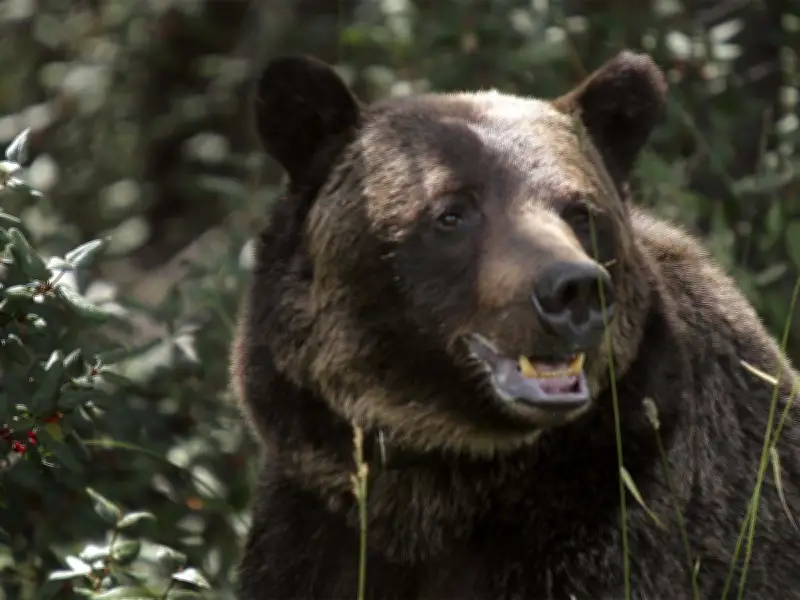
Provincial officials have confirmed that a male grizzly bear was trapped and euthanized after it attempted to break into a chicken coop near Bowden, Alberta, last weekend. The incident occurred approximately 100 kilometers north of Calgary, near Red Lodge Provincial Park.
Bear Incident Details
On June 3, authorities received a report of a bear trying to access a chicken coop near the park, which includes a campground just west of Bowden. The bear was unsuccessful in its attempt. The following day, Fish and Wildlife Enforcement Services set a trap in the area, capturing the animal on June 6.
According to Alberta Forestry and Parks, the bear was believed to be the same individual that had attempted to enter the coop. Following established provincial grizzly bear response guidelines, wildlife officials ordered the bear to be euthanized on the same day it was captured. The carcass was provided to an Indigenous person for traditional use.

Grizzly Bear Range Expansion
Wildlife experts note that grizzly bears have become increasingly common in areas east of the Rocky Mountains in recent years, reoccupying territories they once heavily inhabited. This expansion has led to more frequent human-bear encounters.
In 2021, two people were killed by grizzlies in separate incidents at Water Valley and Waiparous. In 2024, a hunter was mauled near Madden, northwest of Calgary. It is estimated that approximately 25 grizzly bears are killed in Alberta each year, with the vast majority attributed to human actions.
Provincial Management Programs
In 2024, the province launched the Wildland Management Responder Network, which permits qualified citizen hunters to kill problem bears with government approval. The recent incident did not involve this network. Forestry and Parks Minister Todd Loewen stated that two grizzlies have been killed under the program—one in 2025 and another this year—both south of Calgary.
Sport hunting of grizzly bears was banned in 2006 due to concerns about population sustainability. The species was listed as threatened in 2010, a designation that sits in the middle of the conservation scale. A grizzly bear recovery plan was implemented in 2008, aiming to restore habitat and reduce human-animal conflicts and bear mortality.
The province estimates that the grizzly population has grown from approximately 800 in 2010 to over 1,100 today, based on DNA analysis of hair collected from rub trees.